

Maxim Agri, Samakgro to invest US$3.95M in aquafeed plant in Kenya
The facility, to be built in Athi River in Machakos County, will have the capacity to produce more than 20 metric tons of feed per hour.
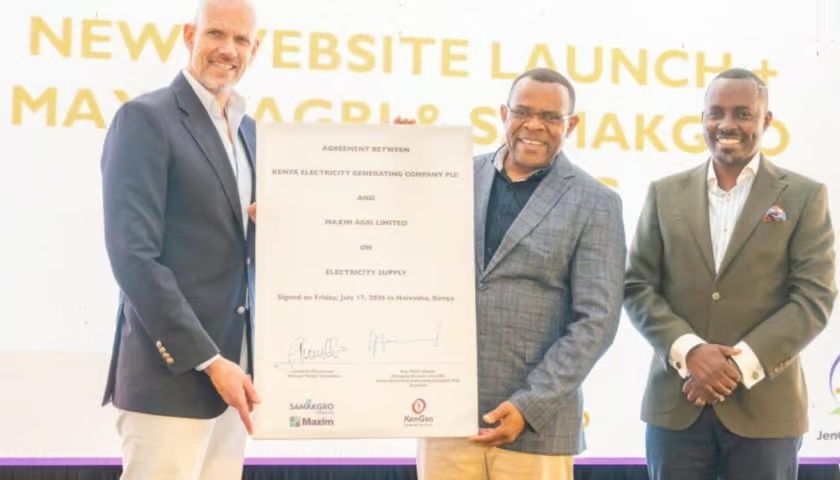
KENYA – Maxim Agri & Samakgro plans to invest nearly US$3.95 million in a geothermal-powered aquafeed manufacturing plant at the Olkaria Green Energy Park in Naivasha County, strengthening Kenya’s local fish feed production capacity as demand from the country’s rapidly expanding aquaculture sector continues to grow.
According to a statement issued on July 17, the facility will produce up to 8 metric tonnes of fish feed per hour and will be powered by 3 megawatts of geothermal energy supplied by the Kenya Electricity Generating Company (KenGen).
The companies have not disclosed when construction will begin or the project’s completion timeline.
The investment is expected to support local aquafeed production while lowering manufacturing costs through the use of renewable geothermal energy, helping address one of the biggest constraints facing Kenya’s aquaculture industry.
The project comes as fish farming continues to expand across the country.
According to the Kenya Fisheries Service (KeFS), aquaculture production increased from 12,635 metric tonnes in 2017 to 33,423 metric tonnes in 2024, reflecting growing demand for quality fish feed.
Further expansion is expected as new commercial fish farming projects come online.
Victory Farms, for example, is planning a KSh750 million (US$5.7 million) tilapia-farming project in Migori County with an annual production capacity of 30,000 metric tonnes, thereby creating additional demand for locally manufactured aquafeed.
Local feed production targets lower costs
The Naivasha investment follows a series of projects aimed at reducing Kenya’s dependence on imported aquafeed ingredients and finished feed.
In November 2025, German-Kenyan joint venture DiscoverAqua announced plans to build an aquafeed factory in Athi River, Machakos County, with a production capacity exceeding 20 metric tonnes per hour.
Industry analysts say increasing domestic feed production is essential to improving the competitiveness of Kenya’s aquaculture sector.
A World Economic Forum report published in January 2026 found that feed accounts for 70% to 80% of aquaculture production costs in Africa, compared with about 60% globally.
The report noted that aquaculture production costs across the continent remain 10% to 20% higher than the global average, largely because of limited local feed manufacturing capacity and reliance on imported soybean meal and fishmeal.
By producing feed locally and using geothermal energy to reduce operating expenses, the Maxim Agri & Samakgro facility is expected to improve the availability and affordability of feed for fish farmers.
The investment also supports Kenya’s broader efforts to expand sustainable aquaculture by combining renewable energy with local feed manufacturing, strengthening the country’s fish production value chain while improving profitability for producers.
Sign up HERE to receive our email newsletters with the latest news updates and insights from Africa and the World, and follow us on our WhatsApp channel for updates.


Be the first to leave a comment