

Botswana secures US$20.8M investment to boost local fodder production
The fodder strategy will help reduce overgrazing and #landdegradation while simultaneously creating opportunities for import substitution.
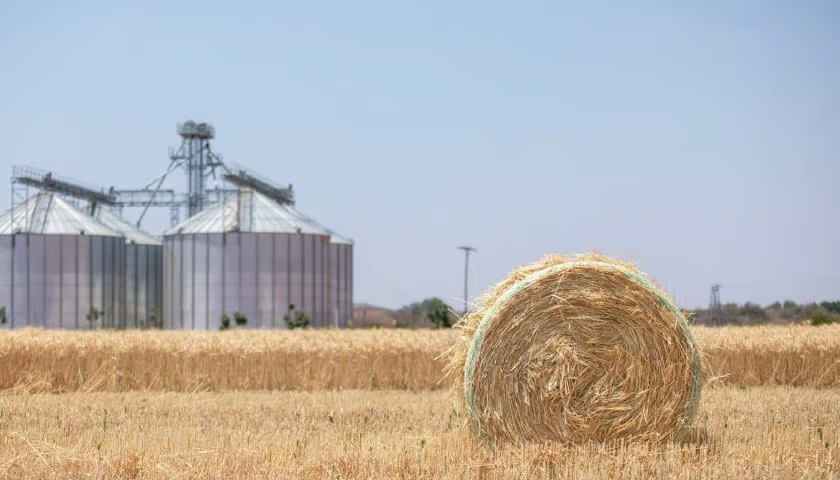
BOTSWANA – Botswana has secured a P288.5 million (US$20.8 million) private investment to establish a large-scale irrigated fodder production project aimed at strengthening domestic livestock feed supplies, reducing imports and supporting the country’s beef industry.
The investment follows a joint venture facilitated by the Botswana Investment and Trade Centre (BITC) between the Matopi Commercial Farmers Association and South African agribusiness Pinion South Africa.
The project is expected to create about 183 direct jobs while expanding local production of fodder for Botswana’s livestock sector.
Speaking during the signing ceremony, BITC Chief Executive Officer Keletsositse Olebile described the agreement as an important milestone for the country’s commercial agriculture sector.
He said BITC would continue supporting the implementation of the project as part of efforts to attract investment into agriculture and strengthen Botswana’s economic diversification agenda.
The investment targets one of Botswana’s biggest agricultural challenges: limited domestic livestock feed production.
The country relies heavily on imported fodder, particularly from neighbouring South Africa, due to recurrent droughts, low rainfall and limited irrigated farming.
These constraints have reduced the availability of quality feed for livestock producers while exposing farmers to rising feed costs and regional supply disruptions.
Expanding irrigated fodder production is expected to improve the availability of livestock feed, reduce dependence on imports and strengthen the competitiveness of Botswana’s beef industry, one of the country’s leading agricultural export sectors.
Botswana’s beef industry supplies both domestic and international markets, including premium export destinations such as the European Union.
The project also supports the government’s broader strategy of diversifying an economy that has traditionally depended on diamond mining.
Agriculture currently contributes only about 2% of Botswana’s gross domestic product, reflecting longstanding challenges including water scarcity, climate variability and limited irrigation infrastructure.
Authorities have increasingly promoted private-sector investment in climate-resilient agriculture to expand domestic food production, strengthen agricultural value chains and improve food security.
Livestock remains one of Botswana’s most important agricultural industries and a major source of rural livelihoods and non-mineral export earnings.
However, feed shortages continue to constrain productivity, particularly during prolonged dry seasons when natural grazing deteriorates.
According to the Food and Agriculture Organization (FAO), inadequate feed availability remains one of the main factors limiting livestock productivity across Southern Africa, with droughts increasing pressure on pasture resources throughout the region.
The new investment is expected to help address these challenges by increasing local fodder production under irrigation, providing a more reliable supply of feed throughout the year.
Officials believe the project will strengthen the resilience of Botswana’s livestock sector while reducing exposure to volatile import markets and supporting long-term growth in commercial agriculture.
The initiative also aligns with ongoing efforts to encourage greater private investment in agricultural production as Botswana seeks to build a more diversified and climate-resilient economy.
Sign up HERE to receive our email newsletters with the latest news updates and insights from Africa and the World, and follow us on our WhatsApp channel for updates.

Be the first to leave a comment