

Natural salt licks support livestock recovery after drought in northern Kenya
This is a symbol of recovery after a drought that nearly wiped out the animals on which they depend for their lives.
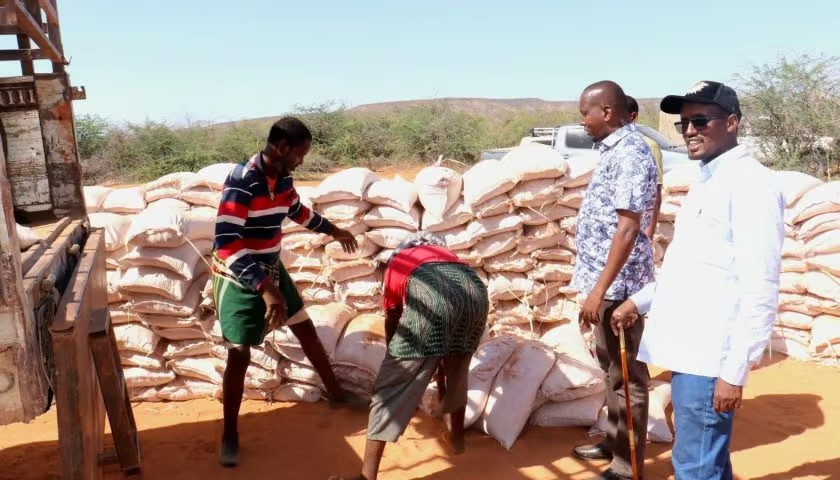
KENYA – Pastoralists in Mandera County are using natural salt licks harvested from the River Dawa basin to improve livestock health and productivity as herds recover from the effects of prolonged drought that devastated parts of northern Kenya.
The initiative, which has seen the distribution of 2,000 bags of mineral-rich salt licks to livestock keepers in Lafey Constituency, comes as pastoral communities work to rebuild herds weakened by months of limited pasture and water availability.
For many livestock farmers, the recent rains brought much-needed relief after years of recurrent drought that led to widespread livestock losses across Kenya’s arid and semi-arid lands.
While grazing conditions have improved significantly, herders say mineral supplementation remains critical in helping animals regain strength and productivity.
“Our livestock love the salt. The drought had left many animals weak and at risk of starvation, but the recent rains brought back pasture. The salt helps improve their health and strength as they recover,” said livestock farmer Abdi Hassan.
Hassan noted that many pastoralists would have struggled to access the salt without support for transportation and distribution.
“The MP intervened and catered for transport, making it possible for livestock keepers from different parts of the constituency to benefit,” he added.
Mineral supplementation helps strengthen drought-affected herds
Livestock experts recognise natural salt licks as an important source of minerals that support animal growth, reproduction, milk production and overall health.
Mineral supplementation becomes particularly important after drought periods, when animals often emerge weakened due to prolonged nutritional stress.
The salt licks sourced from the River Dawa area contain naturally occurring minerals that help improve livestock condition as animals recover from harsh environmental conditions.
Livestock production remains the backbone of the economy in Mandera and much of northern Kenya, where pastoralism provides income and food security for thousands of households.
Cattle, goats, sheep and camels are the primary assets for many families, making livestock health a critical factor in community resilience.
The region has experienced repeated climate-related droughts in recent years, resulting in significant livestock mortality and severe economic losses.
Many pastoral households lost large portions of their herds during the prolonged dry periods, forcing communities to rely on humanitarian support and alternative livelihood strategies.
Although recent rainfall has improved pasture availability and replenished water sources, rebuilding livestock populations remains a long-term challenge.
Recovery is expected to take several seasons as herders seek to restore herd sizes and improve animal productivity.
Local leaders say the salt lick distribution programme is intended to support this recovery process by improving livestock nutrition and helping farmers maximise the benefits of improved grazing conditions following the rains.
During the loading and dispatch of the salt licks in Sala, Lafey MP Mohamed Abdikheir was accompanied by Lafey MCA Adan Hussein Rahoy and other local leaders, who said the programme aims to strengthen livestock production and support pastoralist livelihoods.
The initiative highlights the growing importance of livestock resilience measures in Kenya’s arid regions, where climate variability continues to pose significant challenges to animal production systems.
As pastoral communities rebuild after years of drought, interventions that improve animal health and nutrition are expected to play a key role in restoring household incomes and strengthening food security across northern Kenya.
Sign up HERE to receive our email newsletters with the latest news updates and insights from Africa and the World, and follow us on our WhatsApp channel for updates.

Be the first to leave a comment