
Bunge Brazil certifies sustainable soybeans for SAF
The certification verifies that soybeans processed at the facility carry a low risk of indirect land use change (LUC).
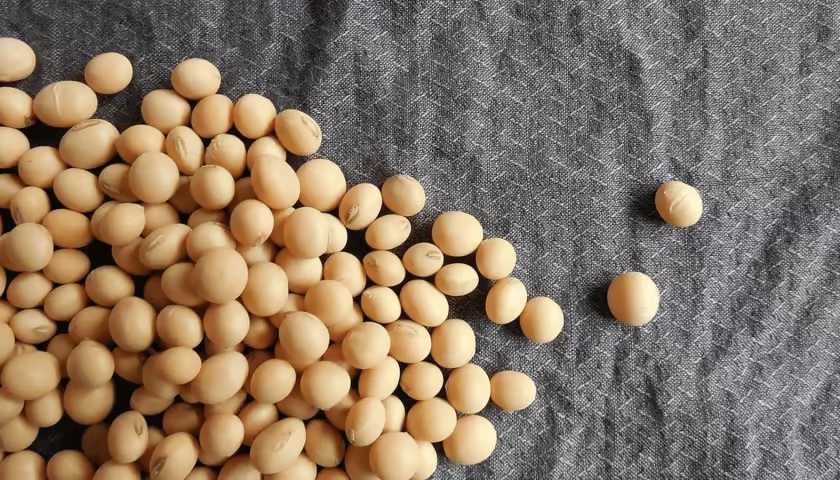
BRAZIL – Bunge Brazil has achieved a landmark certification for sustainable soybeans destined for Sustainable Aviation Fuel (SAF) production, marking a pivotal step in the global transition to low-carbon aviation.
The certification, announced late December 2025, verifies traceability and sustainability metrics across the supply chain and aligns with International Sustainability and Carbon Certification (ISCC) standards for biofuel feedstocks.
The certification is from SCS Global Services under the ISCC CORSIA PLUS protocol, recognised by the International Civil Aviation Organization (ICAO).
The certification includes the ISCC CORSIA PLUS Low-LUC seal, which guarantees traceability and compliance with strict agricultural practices.
The certification verifies that soybeans processed at the facility carry a low risk of indirect land use change (LUC), a critical factor in ensuring that SAF production does not contribute to deforestation or environmental degradation
This initiative covers soybeans from Bunge’s extensive operations in Mato Grosso and Goiás, emphasising zero-deforestation practices, regenerative agriculture, and reduced greenhouse gas emissions.
The certified volumes, initially estimated at 100,000 tonnes, support SAF producers, including Brazilian airlines and international refiners, in their efforts to achieve net-zero flights by 2050.
Bunge’s rigorous audits confirm compliance with no-burn policies, soil health enhancements, and biodiversity preservation.

The certification aligns with ICAO’s broader push for CORSIA (Carbon Offsetting and Reduction Scheme for International Aviation), which requires airlines to reduce emissions through offsets and sustainable fuels.
As demand for SAF grows, Brazil’s certified soybeans could become a vital resource for airlines seeking compliance.
The process integrates Bunge’s 100% traceable soy platform, expanded from 80% in the Cerrado biome, using blockchain for end-to-end monitoring.
Soybeans meet EU Deforestation Regulation thresholds effective in 2026, including geolocation of farms and low-carbon farming practices such as no-till and crop rotation.
Brazil, the world’s top soybean exporter, with 170 million tonnes annually, faces mounting pressure to source sustainably amid EU import rules.
Bunge’s move positions it ahead of rivals like Cargill and ADM, potentially commanding 10-15% price premiums for SAF-grade soy.
SAF demand surges 20% yearly, driven by ICAO’s CORSIA program, with Brazil aiming for 5% SAF blend by 2030.
This achievement makes Bunge the first company worldwide to certify soybeans under this rigorous sustainability standard.
For Brazil, it signals a new chapter in leveraging agricultural exports not just for food, but for clean energy solutions that support the global fight against climate change.
Sign up HERE to receive our email newsletters with the latest news updates and insights from Africa and the World, and follow us on our WhatsApp channel for updates.
Be the first to leave a comment