

Olam to invest US$200M in Ghana’s food and feed industry
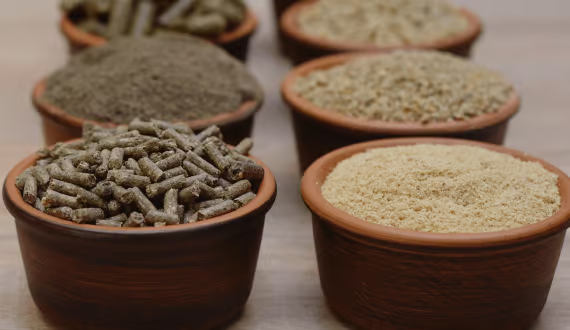
Olam intends to establish feed mills for poultry and aquaculture, two sectors considered strategic to Ghana’s long-term food security.

GHANA – Ghana’s food sector is set for a major transformation as Singapore-based agribusiness giant Olam commits US$200 million to new agro-industrial projects aimed at boosting local production and reducing import dependence.
The initiative, announced on August 29 by Foreign Affairs Minister Samuel Okudzeto Ablakwa, is expected to create about 4,000 jobs while strengthening the country’s food security.
The investment follows President John Mahama’s three-day state visit to Singapore from August 26 to 28, during which Ghana secured nearly US$1 billion in deals across several sectors.
Ablakwa described Olam’s pledge as one of the standout achievements of the visit, reflecting growing investor confidence in Ghana’s economic prospects.

Focus on pasta and feed production
At the centre of Olam’s plan is the construction of a state-of-the-art pasta plant with an annual capacity of 43,000 tons.
The facility is scheduled to commence operations in 2026, marking a significant step toward domestic production of one of Ghana’s most consumed wheat-based products.
Pasta has become a staple in urban diets, with the national market projected to reach US$325.4 million by 2025 and expand by more than 7% annually through 2030.

Currently, Ghana relies heavily on imports, particularly from Turkey, to meet demand. According to the U.S. Department of Agriculture (USDA), about 70% of wheat processed locally is directed toward bread production, leaving pasta supply largely dependent on foreign sources.
By localising production, Olam’s investment is expected to reduce this vulnerability and offer consumers more reliable access to affordable pasta.
Boosting poultry and aquaculture
In addition to pasta, Olam will establish feed mills for poultry and aquaculture, two sectors considered strategic to Ghana’s long-term food security.
The government recently launched its “Poultry Farm to the Table Program” to revive local production and cut reliance on imports.
Ghana is the second-largest consumer of poultry meat in West Africa, but USDA data shows that 80% of its poultry consumption is imported, mainly from the Netherlands, the U.S., Poland, Brazil, and Belgium.
Aquaculture, meanwhile, has been identified as a growth area with significant potential to improve local protein supply and livelihoods. Olam’s investment is expected to provide farmers with affordable, high-quality feed to expand production.
By targeting these three critical industries, Olam is positioning itself as a key player in Ghana’s agro-industrial future while aligning with the government’s broader import substitution strategy.
Sign up HERE to receive our email newsletters with the latest news updates and insights from Africa and the World, and follow us on our WhatsApp channel for updates.

Be the first to leave a comment