

New research highlights the growing concern of microplastic contamination in aquaculture feed
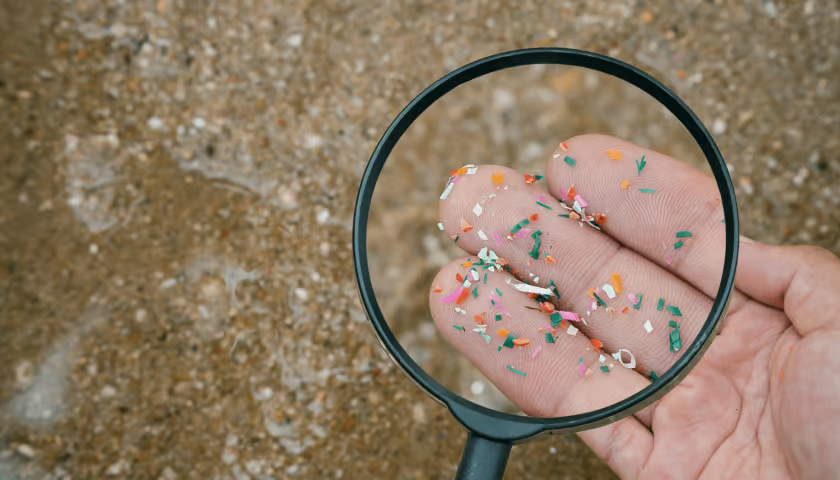
INDIA – A research article published in the Journal of Hazardous Materials by Devi et al. (2024), found that microplastic (MP) contamination has emerged as a significant global issue, infiltrating terrestrial and aquatic environments.
This contamination seriously threatens human health, particularly for populations reliant on fish as a primary protein source.
As evidence mounts regarding the extent of MP contamination in aquaculture feeds, it becomes increasingly clear that stringent control measures are necessary to ensure the sustainability of aquaculture production.
In 2022, global fisheries and aquaculture production reached a record-breaking 223.2 million tonnes, with aquaculture alone contributing 94.4 million tonnes—surpassing capture fisheries for the first time.

Aquaculture has admirably bridged the global aquatic animal protein demand gap, with production projected to increase to 202 million metric tonnes (MMT) by 2030.
The industry’s rapid growth is evident in countries like India, where fish production has surged from 0.75 MMT in 1950-51 to 14.2 MMT today.
However, aquaculture’s sustainability is closely tied to the quality of the feed provided to farmed fish. Fishmeal and oil, derived primarily from capture fisheries, are vital components of aquaculture feeds.
These feeds, often composed of protein-rich powders, cakes, or pellets, are essential for the growth and health of farmed fish.

Unfortunately, recent research highlights a growing concern: microplastics’ contamination of these feeds.
Microplastic contamination
Microplastics, particles smaller than 5mm, originate from the degradation of larger plastic items or the release of microbeads from various products.
These particles have become a major environmental concern, especially in aquatic ecosystems where they are ingested by a wide range of marine species, from zooplankton to fish.
MPs in fishmeal, a primary ingredient in aquaculture feeds, introduce these contaminants into the food chain, posing risks to both farmed fish and humans who consume them.
Marine fish farming, especially in sea pens or other aquaculture systems, faces the dual threat of MP contamination from feed and environmental sources such as water, plastic degradation, wastewater discharge, and runoff. In freshwater systems, similar risks exist, with MPs accumulating in the tissues of farmed fish and crustaceans.
High concentrations of MPs have been observed in species like Salmon salar and Procambarus clarki, leading to physiological and behavioural changes.
The ingestion of MPs by fish can lead to the accumulation of toxic substances in their tissues, posing significant risks to human health when these fish are consumed.
Hazardous polymers, such as polyvinyl chloride, can release harmful chemicals like chlorine, bisphenol A, and phthalates. These chemicals are known to disrupt endocrine systems, cause neurotoxicity, and weaken immune responses in fish.
The bioaccumulation of these substances reduces the quality of aquaculture products, leading to potential economic losses for farmers and health risks for consumers.
A recent study has further emphasised the danger, demonstrating that MPs can negatively impact the health and immunity of farmed fish, affecting crucial biochemical pathways in the liver. Heavy metals like nickel, lead, and cobalt, transferred by MPs in fish feeds, exacerbate these risks.
The findings of this study underscore the urgent need for effective measures to reduce MP contamination in aquaculture feeds. By adopting alternative packaging materials and improving feed processing and packaging procedures, the industry can protect the health of farmed fish and, by extension, human consumers.
Reference:
Devi, S. S., Jayan, S., & Kumar, A. B. (2024). Microplastic assessment in aquaculture feeds: Analyzing polymer variability across commercial fishfeeds from three continents. Journal of Hazardous Materials, 135621. https://doi.org/10.1016/j.jhazmat.2024.135621
Sign up to receive our email newsletters with the latest news updates and insights from Africa and the World HERE.

Be the first to leave a comment