

Zimbabwe launches digital feed dashboard to strengthen livestock resilience against drought
The innovation aims to improve access to information on animal feed resources and strengthen preparedness against future climate shocks.
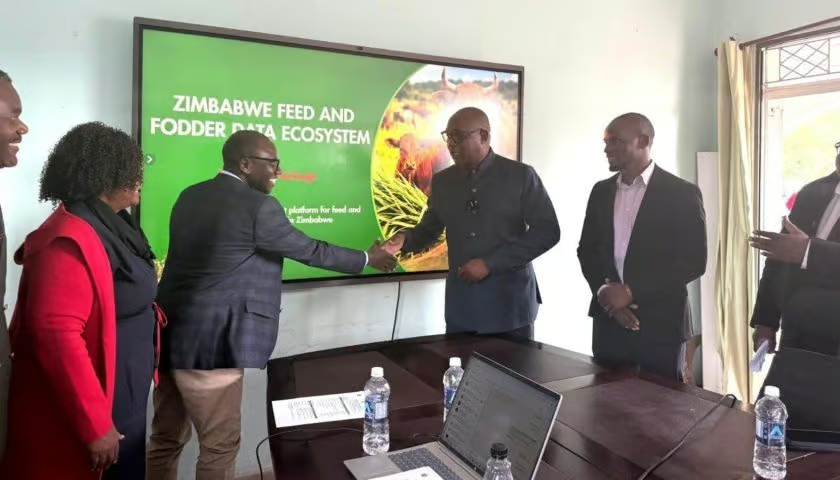
ZIMBABWE – Zimbabwe has launched a digital Feed and Fodder Dashboard to improve livestock feed planning, strengthen drought preparedness and help farmers respond more effectively to climate-related feed shortages.
The platform was officially handed over in Harare. It is expected to provide government agencies, farmers and development partners with real-time information on available feed resources.
The system will support coordinated responses during droughts and other emergencies that threaten livestock production.
The initiative comes as Zimbabwe continues to experience recurring droughts that reduce grazing land, dry up water sources and increase the cost of feeding cattle and other livestock.
Speaking at the launch, Deputy Minister of Agriculture, Mechanisation and Water Resources Development, Davies Marapira, said the dashboard would improve planning.
However, he stressed that increasing local fodder production remains equally important.
He said Zimbabwe already has a well-developed commercial animal feed industry through companies such as National Foods and Profeeds.
The country, however, needs to invest more in fodder production using locally available grasses.
Marapira said teaching farmers how to establish and manage fodder crops would reduce reliance on expensive commercial feeds during dry periods.
He added that perennial grasses and high-protein crops such as lucerne could play an important role in improving livestock nutrition while lowering production costs for both cattle and small stock farmers.
The Feed and Fodder Dashboard was developed under a programme supported by the African Union and the African Union Interafrican Bureau for Animal Resources (AU-IBAR).
The initiative aims to improve access to information on livestock feed while strengthening preparedness for climate shocks.
AU-IBAR Information Systems and Data Analyst Leonard Muganda said limited access to reliable data has often made it difficult for authorities and farmers to respond quickly to feed shortages.
He said the dashboard enables stakeholders to identify where feed resources are available and improve coordination during emergencies.
According to Muganda, the platform also promotes collaboration between government agencies, livestock producers and development partners.
He noted that the programme has established a multi-stakeholder platform that will continue to mobilise resources and support livestock feed management after the current project ends.
Digital tools support climate-smart livestock production
Zimbabwe’s livestock sector has suffered repeated losses during severe droughts as grazing conditions deteriorate and farmers are forced to purchase costly supplementary feed.
Authorities believe the new dashboard will help shift the country from reacting to livestock emergencies towards proactive planning.
By identifying available feed resources before shortages become critical, the system is expected to improve livestock survival and protect rural livelihoods.
The initiative also reflects a broader push across Africa to strengthen climate resilience through better livestock information systems, improved fodder production and coordinated feed management as climate variability continues to threaten animal agriculture.
Sign up HERE to receive our email newsletters with the latest news updates and insights from Africa and the World, and follow us on our WhatsApp channel for updates.


Be the first to leave a comment