
World Bank
-
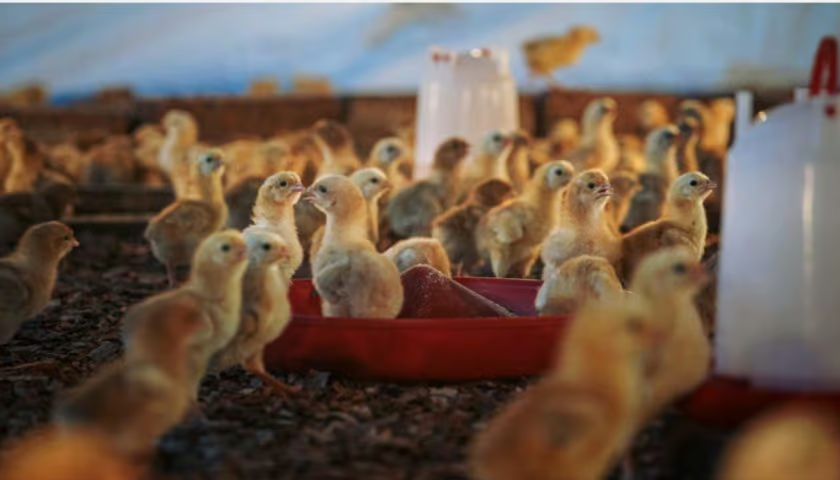
World Bank approves US$60M to boost Congo’s poultry and aquaculture sectors
The initiative will seek to expand access to finance for farmers and private investors while mobilising additional private capital for productive investments.
-

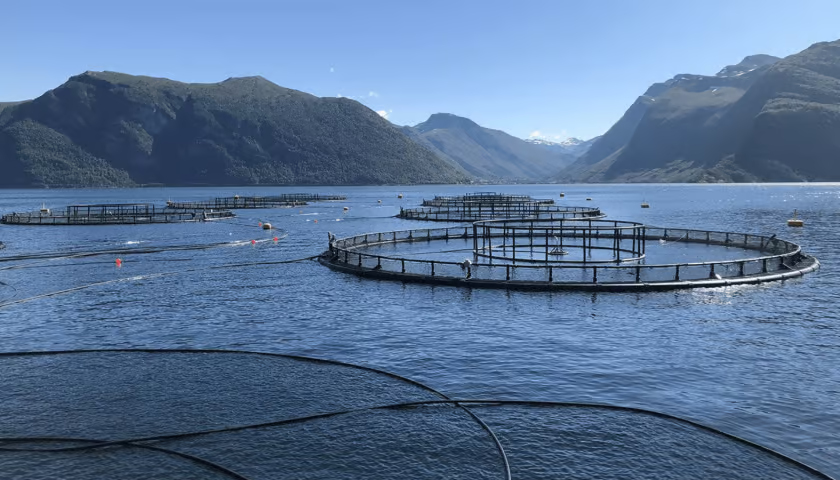
NARA backs World Bank recommendation for rendered proteins in Morocco aquafeeds
World Bank says removing RAP restriction would reduce aquaculture feed costs and exposure to fishmeal price volatility.
-
World Bank to build US$187,000 national animal feed reference laboratory at MOUAU
The laboratory is expected to strengthen Nigeria’s feed testing and regulatory capacity, at a time when the country’s livestock sector is under growing pressure.
-
World Bank-backed L‑PRES marks milestones as Nigeria eyes inclusive livestock growth
The initiative is expected to benefit approximately 1.43 million individuals nationwide, with at least 30% of participants being women.
-
Tanzania secures US$227M from World Bank to boost aquaculture and climate resilience
The World Bank notes that Tanzania’s population is projected to reach 77.7 million by 2030, resulting in a doubling of fish demand.
-
Feed sector sees relief as global grain, oilseed prices slide
The falling prices are bringing welcome cost relief to feed manufacturers, but persistent volatility and trade tensions continue to cloud the outlook.