

Nigeria strengthens HPAI response with FAO support
Since December 2020, Nigeria has recorded 505 confirmed HPAI outbreaks affecting almost 2.56 million birds, including 11 H5N1 infections in 2026 across nine commercial farms.
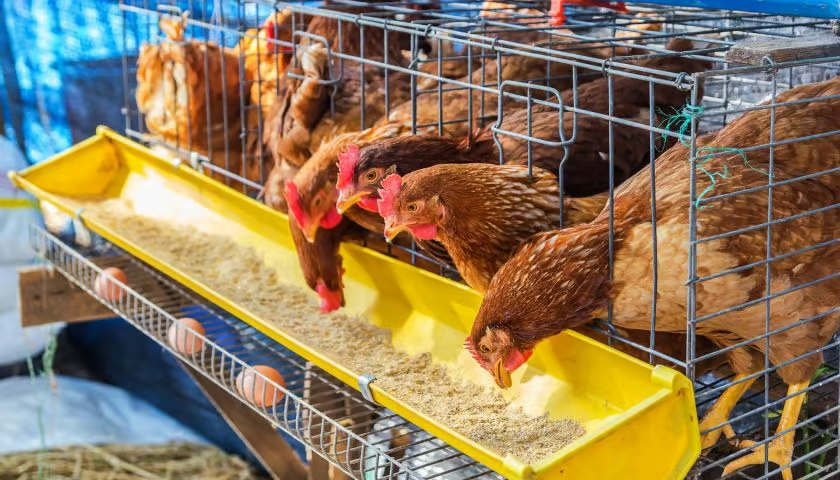
NIGERIA – Nigeria is strengthening its response to highly pathogenic avian influenza (HPAI) with a US$350,000 FAO-supported programme targeting disease surveillance, diagnostics, farm biosecurity and emergency response capacity.
The Emergency Support for the Prevention and Control of Highly Pathogenic Avian Influenza (HPAI) programme was launched by the Nigerian government and the Food and Agriculture Organization of the United Nations (FAO) in May 2026.
The initiative comes as HPAI continues to pose a significant threat to Nigeria’s poultry sector.
Since Nigeria reported its first HPAI cases in 2006, the disease has caused repeated outbreaks, with poultry losses affecting production and livelihoods.
FAO’s latest Sub-Saharan Africa situation update recorded 30 H5N1 events in Nigeria between 1 October 2025 and 9 July 2026, affecting chickens, turkeys and other poultry.
The latest event was reported in Bauchi, Kano, Katsina, Kebbi, Ogun, Plateau and Taraba states.
FAO said the current wave of HPAI in Nigeria has shown an unusual pattern since October 2025, with genetic analysis confirming the EA-2024-DV genotype within the H5N1 clade 2.3.4.4b viruses circulating in West Africa.
Focus on early detection and farm biosecurity
The new programme is based on a One Health approach and is designed to strengthen Nigeria’s capacity to prevent, detect and respond to future outbreaks.
Initial activities will include training personnel involved in HPAI response, improving early detection and diagnostic capacity, strengthening biosecurity on poultry farms and at live bird markets, and improving risk communication and information sharing with poultry farmers.
FAO said the project will also strengthen coordination between the Federal Ministry of Livestock Development, the National Veterinary Research Institute, the Nigeria Agricultural Quarantine Service and state veterinary services.
The organisation has also supported Nigeria with technical knowledge and diagnostic assistance, including the shipment of samples for genetic characterisation.
National rapid-response measures include movement restrictions in affected areas, culling where possible, decontamination and disinfection, targeted surveillance and laboratory testing.
The response comes against the wider importance of livestock to Nigerian livelihoods and food security.
More than 40 million Nigerian households are estimated to depend on livestock, increasing the potential economic impact of major poultry disease outbreaks.

Nigeria has not adopted routine HPAI vaccination as part of its control strategy.
The government has maintained that vaccination would only be considered if scientific evidence demonstrates that it is effective.
With HPAI continuing to circulate in Nigeria and other West African poultry-producing countries, FAO has urged countries to reinforce surveillance and farm-level biosecurity under the One Health approach.
Sign up HERE to receive our email newsletters with the latest news updates and insights from Africa and the World, and follow us on our WhatsApp channel for updates.



Be the first to leave a comment