

KALRO develops natural tsetse fly repellent to protect livestock from deadly diseases
The eco-friendly Tsetse Fly Shield repellent comes in a sachet.
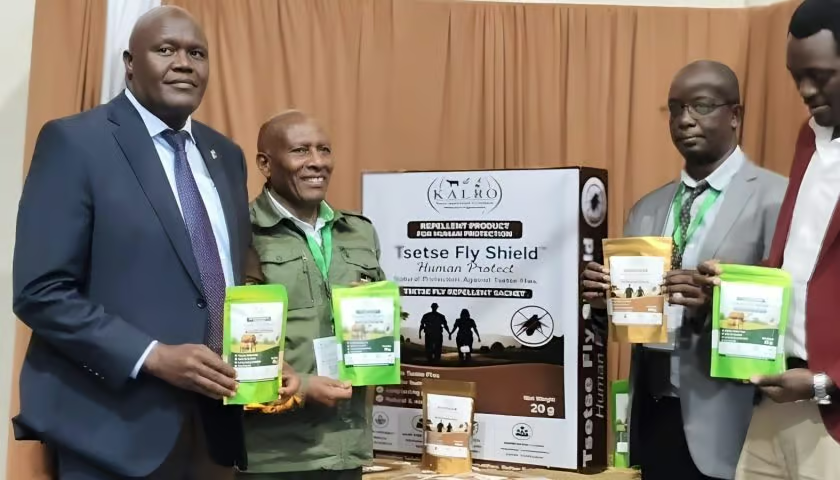
KENYA – Scientists at the Kenya Agricultural and Livestock Research Organisation (KALRO) have developed a natural tsetse fly repellent that protects livestock and humans from tsetse fly bites, offering a new tool to combat trypanosomiasis, one of Africa’s most damaging livestock diseases.
Known as Tsetse Fly Shield, the eco-friendly innovation is derived from natural compounds found in the waterbuck, a wild animal that naturally repels tsetse flies.
Researchers said the product creates a protective barrier that keeps the insects away from livestock and people, reducing the risk of transmitting Animal African Trypanosomiasis (nagana) in livestock and sleeping sickness in humans.
KALRO Deputy Director General for Livestock Research, Dr Evans Ilatsia, said scientists identified the naturally occurring compounds after years of studying why waterbucks are rarely attacked by tsetse flies.
“The waterbuck naturally repels the tsetse fly,” he said.
“We successfully identified the compounds, patented the innovation and are now exploring possibilities for mass production of the tsetse fly repellent.”
Field trials showed that the repellent effectively protected livestock herds in tsetse-infested areas while also reducing people’s exposure.
The research was conducted in partnership with the Kenya Wildlife Service (KWS), whose expertise helped scientists better understand the interaction between wildlife and tsetse flies.
KALRO said the product is now ready for commercialisation and is seeking regulatory approvals, investors and manufacturing partners to support large-scale production across East Africa.
The repellent is supplied in a sachet fitted into a livestock neck collar or harness, providing protection for up to 30 days before replacement.
For people, it can be worn as a bracelet or placed inside vehicles travelling through tsetse-infested areas.
Tackling a major livestock production constraint
According to KALRO researcher Dr Paul Mireji, tsetse flies remain one of the biggest constraints to livestock production across sub-Saharan Africa.
Nagana kills an estimated 3 million cattle annually and causes agricultural losses of about US$4.75 billion.
“With no effective vaccines and limited treatment options against sleeping sickness and nagana, control of tsetse flies constitutes a cornerstone in the campaign to suppress and eliminate these diseases,” Mireji said.
Several African countries have intensified tsetse control programmes in recent years to improve livestock productivity.
Senegal, for example, has reduced tsetse fly populations in the Niayes region by more than 99% through an integrated programme combining conventional vector control with the Sterile Insect Technique (SIT).
The campaign has enabled farmers to adopt higher-yielding dairy breeds, increase milk production and reduce livestock disease losses.
Other countries, including Ethiopia, Uganda, Tanzania, Zambia and Zimbabwe, continue to invest in surveillance, trapping, insecticide-based control and breeding programmes to curb the spread of the pest, which affects millions of livestock across Africa’s tsetse belt.
KALRO believes the new repellent could complement these existing control measures by providing farmers with an affordable, environmentally friendly solution that protects livestock while reducing reliance on chemical insecticides.
Sign up HERE to receive our email newsletters with the latest news updates and insights from Africa and the World, and follow us on our WhatsApp channel for updates.


Be the first to leave a comment