

Bangladesh feed prices rise as raw material costs surge
Rising raw-material costs are squeezing feed mill margins and forcing farmers to cut production.
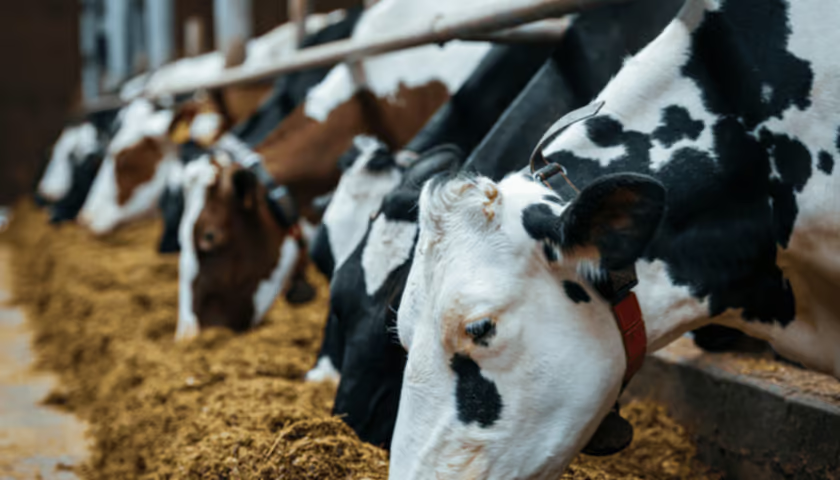
BANGLADESH – Animal feed prices have risen nearly 7% since early August as sharp increases in corn, soybean meal and rice bran costs put pressure on feed mills and poultry farmers.
A kilogram of animal feed that sold for around Tk68 in early August now costs up to Tk72.50.
Feed manufacturers, however, say they are still losing more than Tk3/kg because finished-feed prices have not fully reflected higher raw-material costs.
Industry stakeholders said feed prices had increased twice within a month as major raw materials became more expensive, forcing feed mills to absorb losses and farmers to reduce production.

Over the past month, corn prices have increased by about 24%, de-oiled rice bran (DORB) by 27% and soybean meal by 20%.
Other protein sources have also become more expensive, while exchange-rate fluctuations have added pressure on imported ingredients.
Mosharraf Hossain Chowdhury, president of the Bangladesh Poultry Industries Association (BPIA) and managing director of Astha Feed Mill, said soybean prices had risen from around US$430/tonne in August to US$530, an increase of more than 20%.
He said feed prices were increased by Tk2/kg in late August, followed by a further Tk2.50/kg increase in mid-September to reduce losses among small and medium-sized feed mills.

“There is no alternative to increasing feed prices when the price of soybean rises so sharply. Even after increasing prices twice, we are still losing more than Tk3 per kg,” he said.
The price of corn with 13% moisture has risen to Tk38.80/kg from Tk31.30 a month ago.
DORB has increased from Tk26 to Tk33/kg, while rice bran containing 16% oil has risen from Tk33 to Tk39/kg.
ATM Habibur Rahman, chief business officer of Akij Feed Mills, said corn had risen from Tk28-29/kg in March-May to Tk38-40/kg in June-August. International corn prices also increased from around US$235-240/tonne to nearly US$290, he added.
Raw materials account for around 80-85% of the total cost of producing quality feed, according to Habibur.
“When the prices of corn, soybean meal, rice bran and DORB rise in the local or international market, it becomes difficult for feed mills to sell feed at the previous price,” he said.
Rising feed costs are also forcing farmers to reduce production.
Amir Hossain, a broiler farmer in Gazipur, said he had reduced his monthly feed purchases from around 30 sacks to 28 sacks and cut the number of chickens on his farm.
The rising costs have triggered farmer protests in several districts, with farmers calling for lower feed prices, reduced taxes and duties on imported raw materials, and fair prices for poultry products.
The higher feed costs are also contributing to higher poultry prices.
In Dhaka markets, farm eggs were selling at around Tk150/dozen and broiler chicken at Tk190-200/kg, compared with Tk130-140/dozen and Tk170-180/kg respectively before August.
Sign up HERE to receive our email newsletters with the latest news updates and insights from Africa and the World, and follow us on our WhatsApp channel for updates.

Be the first to leave a comment