

Kenya to restore 13.5M hectares to boost livestock resilience and rangeland productivity
The World Day to Combat Desertification and Drought is observed annually to raise awareness about land degradation, desertification, and the impacts of drought
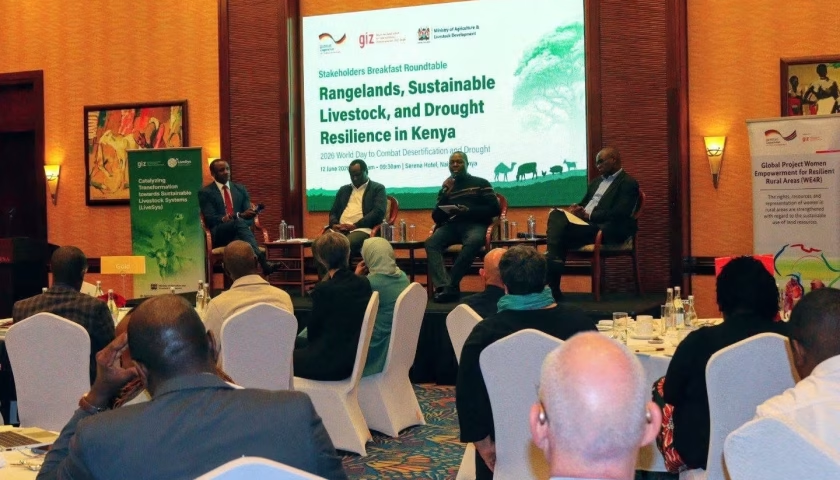
KENYA – The Kenyan government has pledged to restore 13.5 million hectares of degraded landscapes as part of efforts to strengthen sustainable livestock production, improve drought resilience, and secure the livelihoods of pastoral communities across the country.
The commitment was highlighted during a high-level roundtable in Nairobi marking the World Day to Combat Desertification and Drought, where stakeholders discussed rangeland restoration, livestock development, and climate adaptation.
Speaking on behalf of Livestock Development Principal Secretary Jonathan Mueke, Director of Veterinary Services Dr Allan Azegele said Kenya must move beyond discussions and focus on practical interventions to support pastoral livelihoods and protect the country’s livestock resource base.
The State Department for Livestock Development noted that rangelands support more than 70% of Kenya’s national livestock herd, making their restoration central to food security, rural incomes, and climate resilience in arid and semi-arid regions.
Dr Azegele highlighted the challenges facing pastoral communities, including prolonged droughts, shrinking grazing areas, invasive plant species, and limited access to veterinary services.
He pointed to pastoral households in Marsabit and Kajiado counties as examples of communities increasingly affected by climate variability, land pressure, and restricted access to animal health support services.
The government said the restoration programme will be supported by climate-smart interventions to improve rangeland management, strengthen livestock services, and enhance drought preparedness.
These measures are intended to help pastoralists maintain healthier herds and reduce livestock losses during dry seasons.
Dr Azegele said the initiatives are aligned with Kenya’s broader commitments to land restoration and climate adaptation as the country prepares for the upcoming UN Convention to Combat Desertification (UNCCD) COP17 conference.
He emphasised that improving rangeland health is not only an environmental priority but also a direct pathway to improving livestock productivity and pastoral incomes.
Veterinary enforcement action targets illegal animal health practices
In a separate development, the Kenya Veterinary Board has uncovered cases of illegal veterinary practices in Isiolo County following a compliance and enforcement operation conducted in Garbatulla, Merti, and Oldonyiro sub-counties.
The exercise, carried out in collaboration with agencies under the Ministry of Agriculture and Livestock Development and the Ministry of Interior, aimed to safeguard animal health and public safety by enforcing veterinary regulations.
According to the Board, inspection teams identified premises operating without licensed professionals and cases where veterinary medicines were being sold in open markets in violation of the Veterinary Surgeons and Veterinary Para-Professionals (VSVP) Act, 2011.
The Board said similar surveillance in Oldonyiro and Modogashe revealed individuals and distributors allegedly involved in informal veterinary drug trade networks, raising concerns over drug misuse and animal health risks in pastoral regions.
It stressed that only licensed professionals and registered premises are authorised to provide veterinary services and handle animal health products, warning that illegal practices pose risks to livestock productivity, food safety, and public health.
The enforcement operation forms part of broader efforts to strengthen veterinary oversight in pastoral areas, where livestock health services are critical to livelihoods and disease prevention.
The Board also urged livestock keepers to verify practitioners and report illegal activity, reinforcing the importance of regulated veterinary systems in protecting herd health and supporting sustainable livestock production.
Sign up HERE to receive our email newsletters with the latest news updates and insights from Africa and the World, and follow us on our WhatsApp channel for updates.

Be the first to leave a comment