

Nigeria, UNIDO discuss digital livestock traceability
Nigeria is exploring digital livestock identification to strengthen animal health monitoring, market access and efforts to combat livestock theft.
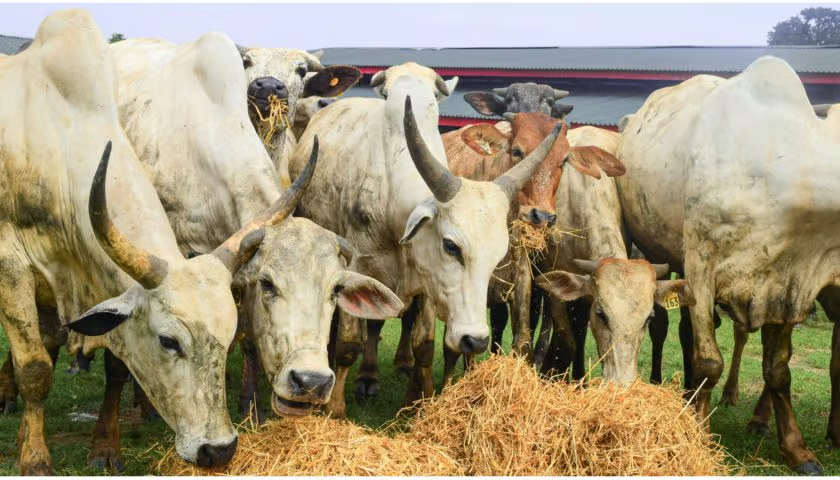
NIGERIA – Nigeria is discussing technical cooperation with the United Nations Industrial Development Organization (UNIDO) to strengthen digital livestock identification and traceability, with potential applications in animal health, product certification and export market access.
The Ministry of Livestock Development said on September 29 that discussions with UNIDO include using identification tags and microchips linked to digital databases to track animals.
Adalberto Carvalho Santos Vieira, UNIDO regional programme manager, said linking animal identification systems to databases could strengthen animal health, build consumer confidence and facilitate access to export markets.
Ethiopia provides a model
UNIDO has already supported a similar Livestock Identification and Traceability System (LITS) in Ethiopia through a project launched in 2021 with China and Ethiopian authorities.
The system uses ear tags linked to mobile technology.
Scanning an animal’s identifier provides information including its birth date, vaccination history and health records, allowing livestock to be registered, tracked and verified throughout their life cycle.
UNIDO said the system is being implemented across 21 districts and 200 communities and is expected to benefit more than 100,000 pastoralists.

The Ethiopia project also includes laboratory upgrades and training.
Diagnostic technologies are being introduced to detect veterinary drug residues and support food safety compliance, while more than 1,132 people have been trained since 2021 in areas including meat inspection, laboratory analysis, slaughterhouse management and digital livestock systems.
Nigeria is seeking support in several of these areas, including livestock identification and traceability, laboratory capacity, inspector training and certification processes for livestock products.
Traceability could also support broader livestock security. Livestock theft is a major concern across West Africa, with the Food and Agriculture Organization (FAO) estimating that cattle rustling costs the region more than US$467 million annually.
From February 9 to 12, 2026, FAO and the Senegalese government brought representatives from West African countries together in Dakar to develop a regional response to livestock theft.
Participants adopted a 2026-2030 regional programme valued at more than US$345 million and endorsed establishing the Subregional Coalition against Cattle Rustling in West Africa and the Sahel.
The initiative includes livestock traceability, cross-border coordination of legal and security responses, and greater involvement of pastoral communities and livestock organisations in prevention and early-warning systems.
The discussions with UNIDO could therefore link digital animal identification with stronger health controls, livestock product certification, export readiness and measures to track animals and combat theft in Nigeria.
Sign up HERE to receive our email newsletters with the latest news updates and insights from Africa and the World, and follow us on our WhatsApp channel for updates.


Be the first to leave a comment