

Ethiopia’s Borana pastoralists say livestock insurance failed after drought losses
IGAD is promoting a renewed livestock insurance program that could be tied to government plans and allow pastoralists to access credit.
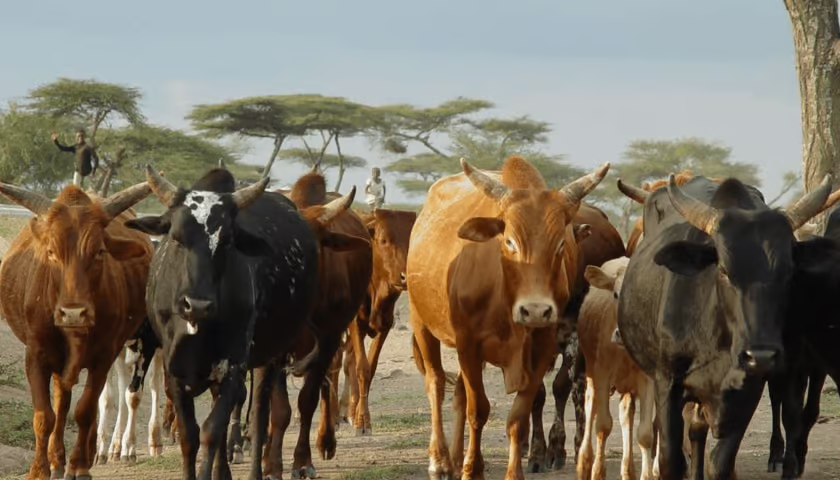
ETHIOPIA – Pastoralists in Ethiopia’s Borana Zone say a livestock insurance scheme designed to protect them from devastating droughts has failed, leaving them uncompensated despite years of payments.
Local officials, however, maintain that payouts were made, deepening mistrust between communities and authorities.
The livestock insurance product, introduced in Ethiopia in 2012 after being piloted in Kenya, was backed by the International Livestock Institute with funding from USAID and the UK’s Department of International Development.
Designed as an index-based system, it aimed to cover up to 80% of pastoralists’ herds from drought-related loss, using satellite and weather data to trigger payouts.
Residents of Borana told Addis Standard, a local Ethiopian news outlet, that they purchased insurance beginning in 2014 but have yet to benefit from it when the drought struck.
“The government told us to buy livestock insurance; we followed and insured up to five cattle. But after two droughts killed our livestock, we were never paid,” said Dido Liban, a pastoralist from Dubluq.
His neighbour, Guyo Haro, echoed the frustration, recalling that the insurance was sold to them through the Oromia Cooperative Bank with the promise that “when drought comes, it will help you.” Instead, he said, “even after waiting through two consecutive droughts expecting to be compensated, nothing was ever paid to us.”
Dida Elema, from Yabello district, said the DRIVE project was introduced through the Oromia Irrigation and Pastoral Bureau and encouraged widespread participation.

“They convinced us that this insurance has benefits and told us to deposit money in the bank, and it should pay us. We must receive compensation for the livestock we lost due to drought,” he said.
Worst drought in four decades
Since the scheme’s launch, Borana has endured two major drought cycles. The 2016 El Niño-triggered drought killed millions of animals and left households food-insecure, while the 2020–2023 drought, described as the worst in 40 years, affected over 800,000 people and wiped out countless herds.
Despite these crises, pastoralists insist they received nothing in return for the premiums they paid. “We bought it believing it had benefits, but after all this, we’ve lost trust,” said 64-year-old elder Liban Jatani.
Officials point to payouts and system gaps
Officials acknowledge the grievances but point to technical and institutional hurdles.
Bagaja Morge, head of the Borana Zone Irrigation and Pastoral Development Bureau, admitted that pastoralists’ complaints are valid but stressed that the program is not government-owned. “We pressed for solutions, but compensation has not been delivered as expected,” he said.
At the Oromia regional level, bureau head Roba Turche insisted payouts had been made in Borana and other drought-affected districts, citing 63.9 million birr delivered across Oromia. He emphasised that payments only go to registered policyholders.
Masresha Taye, a livestock insurance expert, explained that payouts rely on rainfall and satellite grazing data, but delays in monitoring and disruptions in NASA data have undermined the system.
“Unless the scheme is rebuilt with proper regulation, oversight, and commitment, it risks collapsing,” he warned.
However, regional leaders say reform is underway. IGAD is promoting a renewed livestock insurance program that could be tied to government plans, potentially allowing pastoralists to use insurance as collateral for loans from the Development Bank of Ethiopia.
Sign up HERE to receive our email newsletters with the latest news updates and insights from Africa and the World, and follow us on our WhatsApp channel for updates.


Be the first to leave a comment