

Regulatory clarification allows hemp seed meal in Australian feed
This clarification marks a turning point for hemp stakeholders, who have long struggled against the blanket assumption that all hemp contains cannabinoids such as THC and CBD, which can have psychoactive or drug-like effects.

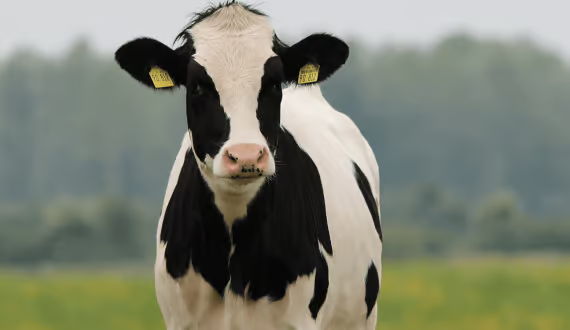
AUSTRALIA – Australian livestock producers can now legally feed hemp seed meal to their animals following a key clarification by the Australian Pesticides and Veterinary Medicines Authority (APVMA), which adjusted regulatory language on its website in May 2025.
The update clarifies that feeding cannabis or hemp, including hemp oil, to livestock and pets is only prohibited if the ingredient meets the definition of a veterinary chemical product and is not registered with the agency.
According to APVMA’s revised statement, “It is the responsibility of the person supplying a veterinary product to determine whether the product is a veterinary chemical product based on the attributes, properties and claims of the specific product.”
Previously, the APVMA had broadly categorised cannabis, cannabinoids, and hemp as veterinary chemical products, creating uncertainty for producers.
However, following “engagement from the Australian hemp industry,” the agency decided to update the language to offer clearer guidance. Notably, the underlying legislation around hemp production and use remains unchanged.
This clarification marks a turning point for hemp stakeholders, who have long struggled against the blanket assumption that all hemp contains cannabinoids such as THC and CBD, which can have psychoactive or drug-like effects.
“The assumption that all hemp contains cannabinoids… has long been a challenge to the global hemp industry,” said Tim Crow, managing director of Australian hemp processor and distributor Hemp Harvests.
A chance to scale up

For manufacturers like Arthur Wajs, co-founder and CEO of pet product company HempPet, the decision presents new business opportunities.
“This is an opportunity for us in Australia… to monetise byproducts but also take advantage of it because that meal, the byproduct of hemp production, is an excellent nutritional source,” Wajs said.
Until now, the inability to process and market hemp byproducts like seed meal has hindered industry growth. The lack of a viable outlet has inflated the cost of hemp seed and prevented it from competing with other health food products.
Still, Crow warned that current limitations in local hemp production mean widespread use of hemp meal in animal feed will take time.
“I think eventually common sense will prevail, and as the industry starts to develop, there is a lot of potential for growth in the hemp industry,” Crow added. “It’s just a matter of timing and the ability of the industry to come together in lobbying on these points.”
A global trend toward cautious acceptance
Australia’s regulatory shift mirrors a cautious but growing global acceptance of hemp-based feed ingredients.
In the United States, some states have approved hemp seed meal for use in poultry diets, while pet food applications remain limited and CBD remains off-limits.
The European Union and the UK permit hemp seed and its byproducts in animal feed under strict THC thresholds, but continue to ban CBD.
Canada, meanwhile, allows hemp in pet food but has yet to greenlight its use in livestock feed.
With its latest clarification, Australia joins a slowly expanding group of countries exploring the nutritional and economic value of hemp byproducts, though always under tightly controlled regulatory frameworks.
Sign up HERE to receive our email newsletters with the latest news updates and insights from Africa and the World, and follow us on our WhatsApp channel for updates.

Be the first to leave a comment