

Pakistan launches 10-year fisheries policy to harness aquatic potential
With targeted reforms and investment in value-added processing, the sector has the potential to generate up to US$10 billion in economic returns.
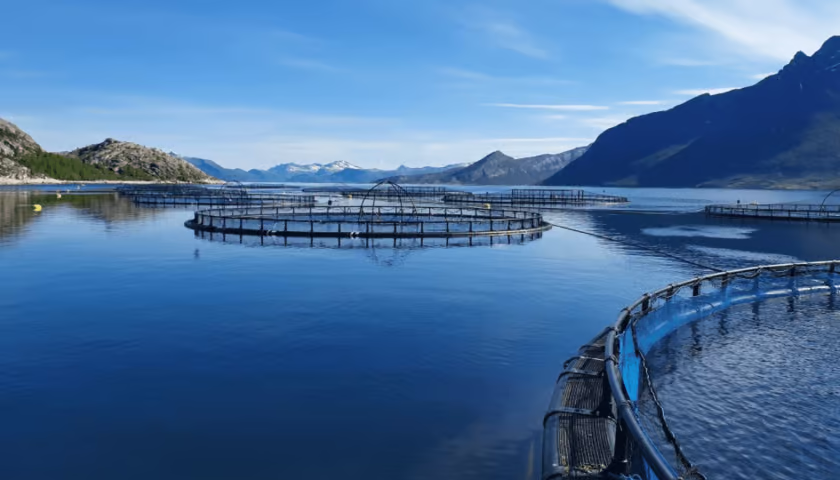
PAKISTAN – The government of Pakistan has unveiled a comprehensive National Fisheries and Aquaculture Policy (2025–2035), aimed at revitalising the country’s seafood sector and aligning it with sustainable economic goals.
The announcement was made during a national workshop hosted by the Ministry of Maritime Affairs on July 9 2025.
Federal Minister Muhammad Junaid Anwar Chaudhry highlighted the scope of the policy, which seeks to improve coordination between federal and provincial agencies, strengthen regulatory oversight, and position Pakistan to meet international environmental and trade standards.
“This policy represents a turning point for institutions and communities working to develop Pakistan’s blue economy,” Chaudhry said during the event.
He emphasised the need for ongoing collaboration from all stakeholders to ensure successful implementation.
Pakistan’s fisheries and aquaculture sector, despite access to vast marine and inland water resources, remains largely stagnant.
It currently contributes less than 0.5% to the national GDP, a figure the government believes can be significantly improved.
Chaudhry pointed out that weak governance, overexploitation of marine stocks, and outdated infrastructure have long hampered progress.
However, with targeted reforms and investment in value-added processing, the sector has the potential to generate up to US$10 billion in economic returns.
The new policy sets out a framework that prioritises environmental protection, resilience to climate change, and the integration of modern technologies across the seafood supply chain.
It also includes measures to promote gender equity, safeguard children in the workforce, and encourage sustainable practices in both capture fisheries and aquaculture.
Delegates from Sindh and Balochistan, provinces with extensive coastlines and fishing communities, were present at the launch, alongside representatives from civil society, academia, and government bodies.
Discussions focused on aligning local practices with national objectives and on the importance of data-driven management to ensure the long-term viability of fish stocks.
The initiative comes at a time when Pakistan’s domestic fish consumption remains strikingly low, around 2 kilograms per person per year, compared to the global average of 17 kilograms.
A significant share of Pakistan’s seafood catch is exported, particularly from marine fisheries, leaving relatively little for the domestic market.
Chicken and lamb continue to dominate Pakistani diets, though there is growing interest in fish options, particularly catfish, among urban restaurants and hotels.
Analysts suggest the new policy could catalyze changing consumption patterns and boosting domestic demand, especially if supported by awareness campaigns and improved cold-chain logistics.
With clear policy goals and increasing recognition of the economic and nutritional value of seafood, Pakistan appears poised to reshape its fisheries landscape over the next decade.
Sign up HERE to receive our email newsletters with the latest news updates and insights from Africa and the World, and follow us on our WhatsApp channel for updates.


Be the first to leave a comment