

Kenyan poultry industry in crisis as feed prices soar
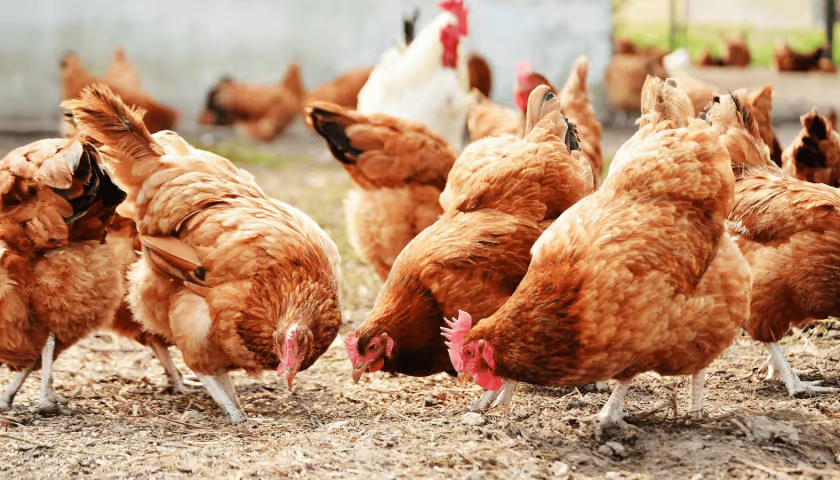
KENYA – Kenya’s poultry industry is struggling under the weight of skyrocketing feed prices, forcing many farmers to cut costs, switch to alternative feeds, or abandon their businesses altogether.
Over the past four years, feed prices have surged by at least 37%, making poultry farming increasingly unprofitable.
A report by the Competition Authority of Kenya (CAK) highlights that poultry feed in Kenya costs nearly twice as much as in South Africa and Brazil.
Despite importing key ingredients like soybean meal, sunflower cake, and maize from Tanzania, Uganda, Malawi, and Zambia, local feed prices remain prohibitively high.
Surprisingly, even imported feed from Dar es Salaam is cheaper than Kenyan-produced alternatives despite transportation and import costs.
With rising costs, many farmers are resorting to Black Soldier Fly larvae, azolla, duckweed, omena, and homemade feed formulations to cut expenses—some reducing feed costs by up to 75%. However, these efforts alone are insufficient to offset the financial burden.

The price of a 50-kilogram bag of layers mash has more than doubled from US$14 to US$32 in five years, while egg prices remain stagnant at around US$2 per tray.
This imbalance has squeezed profit margins, leading to declining sales for feed manufacturers and forcing at least 30 feed production companies to shut down in the past three years—eliminating over 1,000 jobs.
Beyond high feed costs, poultry farmers are battling market control by powerful intermediaries. In Nairobi, farmers accuse middlemen of dictating artificially low prices at City Market, making it difficult to break even.
Those in Kiambu and Machakos counties report significant financial losses, claiming wholesalers set unfair prices, forcing them to sell below production costs.
Faced with these challenges, nearly 200 farmers gathered at a recent Nairobi Poultry Farmers Association meeting, demanding government intervention and fair pricing regulations.
Association head Samuel Ndung’u urged authorities to curb monopolistic practices and establish a transparent pricing system reflecting actual production costs.
A more competitive feed market could save Kenyan farmers over US$23.4 million annually, according to CAK. Experts suggest that strengthening farmer cooperatives could help secure better prices, while improved financial management and sustainable farming practices could provide long-term resilience.
Sign up HERE to receive our email newsletters with the latest news updates and insights from Africa and the World and follow us on our WhatsApp channel for updates.



Be the first to leave a comment