

Global poultry industry to soar in 2025 amid challenges: RaboResearch report
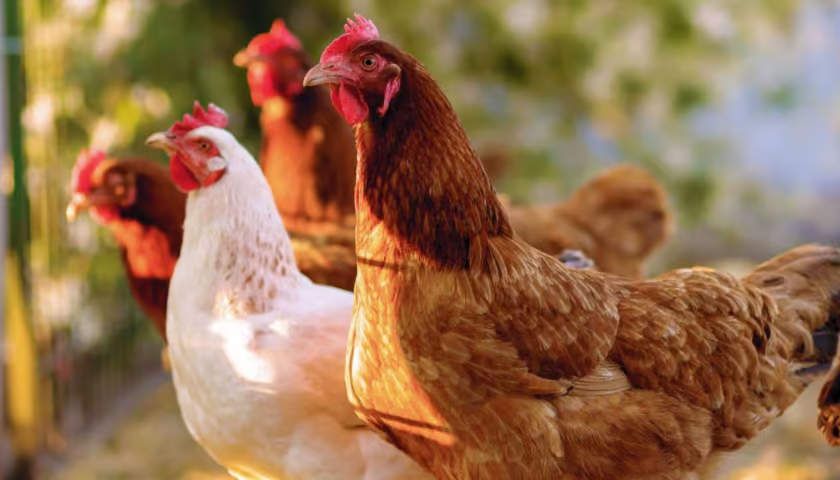
GLOBAL – The global poultry industry is projected to grow by 2.5% to 3% in 2025, marking a steady continuation of its expansion trajectory, according to the latest report by RaboResearch.
Poultry remains a cost-effective protein option, making it particularly attractive in a global economy where elevated prices for other animal proteins persist.
Nan-Dirk Mulder, Senior Animal Protein Analyst at RaboResearch, emphasised poultry’s strong positioning amid economic pressures.
“Chicken will remain well-positioned in times of expensive competing proteins and lower costs,” Mulder stated.
As consumers worldwide face tighter budgets, chicken’s versatility and affordability continue to drive its popularity. This is especially evident in regions where food inflation has pushed households to seek more economical dietary options without compromising nutritional value.
Sustainability drives growth in developed economies
In developed nations, sustainability has emerged as a significant growth driver. With poultry having a substantially lower carbon footprint than beef or pork, it has become a favoured choice for environmentally conscious consumers.

European markets, particularly, are embracing poultry as governments and producers align with global sustainability goals.
The report also underscores the role of sustainability commitments from major retailers and food service companies, reshaping consumer preferences and bolstering demand for poultry products.
Emerging regions, including Southeast Asia, Latin America, the Middle East, and Africa, are expected to lead global poultry production growth.
Rising disposable incomes, urbanisation, and shifting dietary habits in these regions are fueling demand.
For instance, as more families in these markets access affordable poultry products, consumption rates are expected to climb, contributing significantly to global expansion.
Though a developed market, Europe is also forecasted to outpace global growth rates, reflecting robust demand driven by affordability and sustainability initiatives.
Avian influenza and geopolitical tensions remain persistent challenges
Despite the optimistic outlook, the poultry industry is not without challenges. The ongoing outbreak of highly pathogenic avian influenza (HPAI), which has disrupted supply chains since early 2022, remains a major concern.
A resurgence of cases in Central Europe and Northeast Asia has further strained the global supply of breeding stock, creating ripple effects across the industry.

Countries have intensified vaccination campaigns and implemented stricter biosecurity protocols to mitigate these risks. However, trade disruptions linked to disease outbreaks, coupled with potential import restrictions, pose significant threats to market stability.
Geopolitical tensions add another layer of uncertainty. The RaboResearch report highlights trade volatility driven by policy shifts, particularly in the United States, and ongoing tensions between Europe and China.
These factors could lead to fluctuating trade flows and pricing, complicating long-term planning for industry stakeholders.
Moreover, the tight supply of breeding stock is a pressing issue, especially for emerging markets seeking to scale up production.
This bottleneck underscores the need for strategic investments in breeding programs and supply chain resilience.
Sign up HERE to receive our email newsletters with the latest news updates and insights from Africa and the World and follow us on our WhatsApp channel for updates.


Be the first to leave a comment