

Canadian start-up opens first commercial-scale black soldier fly larvae facility
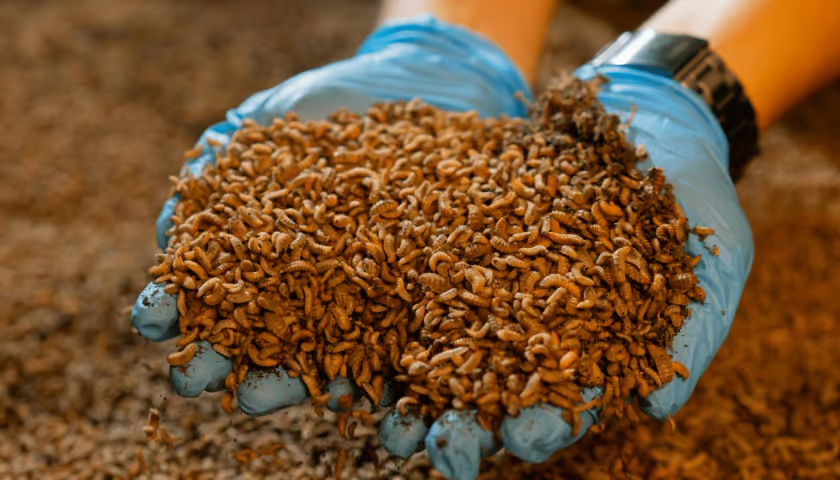
CANADA – Oberland Agriscience, a Canadian innovator, has officially launched its first commercial-scale black soldier fly larvae (BSFL) facility, marking a significant milestone in its mission to revolutionise animal and soil nutrition.
The 108,000-square-foot facility, located on the outskirts of Halifax, is a testament to the company’s years of research and development, which have seen it transition from pilot projects to full-scale production.
Founded in 2017 by Dr Greg Wanger, a geologist and environmental microbiologist with a background in cutting-edge space technology from NASA’s Jet Propulsion Laboratory, Oberland Agriscience leverages biology-driven technology to create sustainable, nutritious solutions for the agricultural industry.
The company focuses on harnessing the power of black soldier fly larvae, which can efficiently convert organic waste into high-quality protein and other valuable nutrients.

“Black soldier fly larvae are a tremendous insect, capable of transforming almost any organic matter into a valuable protein with almost unrivalled efficiency,” said Dr. Wanger.
“The food waste challenge isn’t going away, and the demand for high-quality protein continues to escalate. We harness biology and cutting-edge technology to drive nutritional innovation, delivering natural, nutrient-dense solutions.”
The new facility represents the culmination of Oberland’s commitment to sustainability and innovation.
The company is setting new standards in producing insect-based nutrition for animals and soil health by utilising advanced technologies such as artificial intelligence (AI), robotics, and predictive analytics.

The process is designed to transform pre-consumer waste and food by-products into valuable resources, contributing to a circular economy and reducing the reliance on unsustainable inputs.
With his extensive experience in scientific research, Dr. Wanger has spearheaded Oberland’s focus on circular agriculture and zero-waste solutions.
The company aims to support animal and soil nutrition while addressing environmental concerns by reducing food waste and creating sustainable protein sources.
“Our mission is to enable truly circular economies, transforming food and beverage production by-products into valuable resources for animals and soil,” Dr. Wanger explained. “We’re driving a transparent, sustainable approach that not only supports animal and soil nutrition but also reduces the environmental impact of traditional feed production.”
Oberland Agriscience is also an active member of the North American Coalition for Insect Agriculture (NACIA), an organisation dedicated to advancing the insect agriculture industry.
Dr. Wanger recently attended the NACIA’s annual general meeting in North Carolina, where he and his industry peers collaborated to explore the future potential of insect agriculture and its role in creating sustainable food systems.
As demand for alternative, sustainable protein sources continues to grow, Oberland Agriscience is positioning itself at the forefront of a rapidly emerging industry with a vision to reshape how we think about waste and nutrition.
Sign up HERE to receive our email newsletters with the latest news updates and insights from Africa and the World and follow us on our WhatsApp channel for updates.

Be the first to leave a comment