
ILRI marks 50 years of transformative livestock research
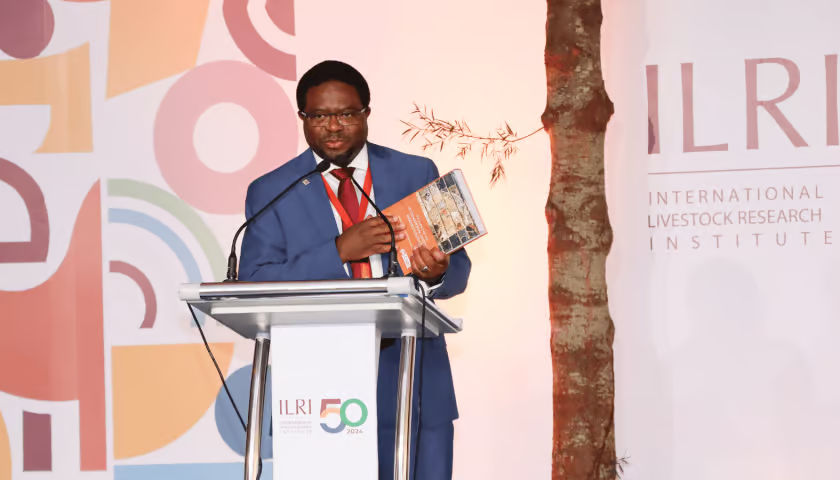
KENYA – The International Livestock Research Institute (ILRI) is celebrating 50 years of groundbreaking work in livestock research, focusing on transforming global livestock systems to improve livelihoods and ensure a better planet.
ILRI was established on September 21, 1994, as a not-for-profit international organisation through an agreement involving Kenya, Ethiopia, Denmark, Sweden, Switzerland, and the United Nations Environment Programme.
Headquartered in Nairobi, Kenya, with additional hosting in Ethiopia, the institute has since become a central player in livestock innovation, blending cutting-edge research with local expertise to drive impactful solutions.
Over the years, ILRI has become one of 15 global CGIAR research centres committed to agricultural development.
By fostering partnerships with governments, universities, private companies, and community organisations, the institute has tackled challenges in livestock health, productivity, and environmental sustainability, contributing to the well-being of millions of smallholder farmers.
During its 50th-anniversary celebrations in Nairobi, Kenya’s Cabinet Secretary for Agriculture and Livestock Development, Dr. Andrew Karanja, emphasised ILRI’s importance to national and global development.
He highlighted the alignment of ILRI’s work with Kenya’s Vision 2030 and the Agricultural Sector Transformation and Growth Strategy (ASTGS) and praised the institute’s role in promoting innovation, inclusivity, and resilience.
Dr. Karanja affirmed the government’s commitment to deepening its partnership with ILRI to drive sustainable growth in agriculture and livestock.
“ILRI’s focus on innovation, inclusivity, and resilience positions it as a vital partner in achieving sustainable growth,” he stated during the celebrations.
ILRI’s contributions over the past five decades have been transformative. The institute has spearheaded projects in livestock genetics, such as the African Dairy Genetic Gains (ADGG) and Tropical Poultry Genetic Solutions (TPGS), which have enhanced disease resistance and productivity in livestock breeds.
Its work in animal nutrition has advanced forage research, including improving Napier grass and identifying Brachiaria grasses, which are essential for boosting dairy production.
ILRI’s vaccine research has yielded significant results in animal health, including trials for combating contagious bovine pleuropneumonia and breakthroughs in addressing East Coast fever.
Beyond these achievements, ILRI’s research extends to climate-smart livestock systems and sustainable intensification of crop-livestock practices.
It has also championed community-led rangeland restoration and contributed to policies to build resilience in climate-vulnerable regions.
According to ILRI’s Director General, Professor Appolinaire Djikeng, the institute’s innovative approaches have strengthened food security, reduced poverty, and improved the livelihoods of millions.

Looking ahead, ILRI’s new corporate strategy for 2024-2030, titled Unlocking Sustainable Livestock’s Potential Through Research for Better Lives and a Better Planet, focuses on tailoring livestock solutions to local needs, influencing policy and investments, and expanding partnerships to deliver lasting impacts.
The strategy aims to transform the lives of over 300 million people by advancing sustainable livestock systems that promote food security, environmental health, and poverty reduction.
The institute’s ability to combine global expertise with local understanding has made it a trusted partner in driving change.
With its new direction, ILRI seeks to deploy scalable solutions that address the challenges of climate change, food insecurity, and economic inequality.
Professor Djikeng emphasised that the new strategy builds on ILRI’s legacy of innovation, ensuring that its research benefits even more people globally.
“Our research will deploy scalable solutions while influencing policies to achieve significant impacts. This strategy builds upon ILRI’s legacy of advancing livestock health, productivity, and environmental sustainability,” Professor Djikeng emphasised.
Sign up HERE to receive our email newsletters with the latest news updates and insights from Africa and the World and follow us on our WhatsApp channel for updates.


Be the first to leave a comment