

Côte d’Ivoire partners with Egypt to boost aquaculture, strengthen fish feed production
Egypt produced 2 million metric tons of fish in 2024, with aquaculture accounting for 83% of total output, making it Africa’s leading fisheries producer.
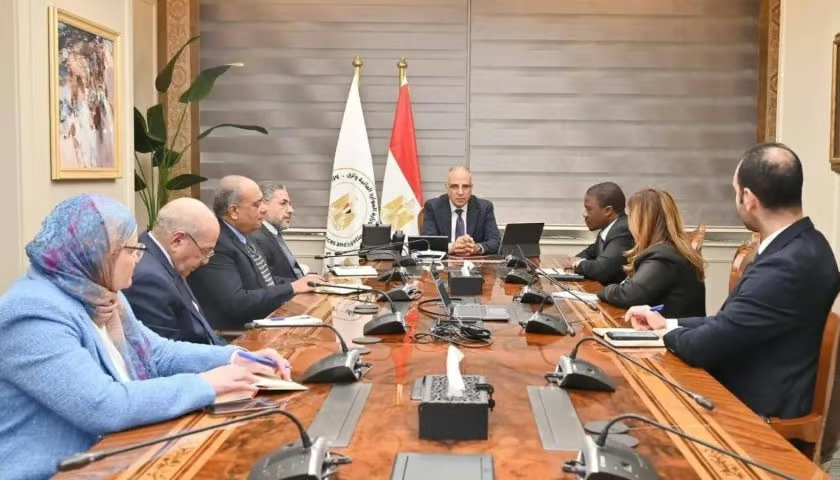
IVORY COAST – Côte d’Ivoire has signed a memorandum of understanding (MoU) with Egypt to strengthen cooperation in fisheries, aquaculture and fish feed development as the West African nation seeks to revive domestic fish production and reduce its dependence on imports.
The agreement, signed on June 29 between Côte d’Ivoire’s Ministry of Animal and Fisheries Resources and Egypt’s General Authority for Fish Resources Development (GAFRD) in Cairo, covers aquaculture development, marine environmental protection, technology transfer, applied research, professional training and efforts to combat illegal, unreported and unregulated (IUU) fishing.
The partnership places particular emphasis on fish farming and feed production, areas considered essential for increasing aquaculture productivity and improving food security.
Egypt is Africa’s largest fisheries producer, generating about 2 million metric tonnes of fish in 2024, according to the Food and Agriculture Organization (FAO).
Aquaculture accounted for approximately 83% of that production, supported by investments in intensive fish farming, genetics, feed manufacturing and processing infrastructure.
The country’s aquaculture production has grown by about 36% over the past decade, rising from 1.17 million metric tonnes in 2015 to around 1.6 million metric tonnes in 2024.
For Côte d’Ivoire, Egypt’s expertise offers an opportunity to strengthen its aquaculture industry and improve access to modern fish farming technologies, including efficient feeding systems, which account for the largest share of production costs.
Feed development central to aquaculture expansion
Reliable access to quality feed remains one of the biggest constraints facing aquaculture across Africa, where many producers depend on imported feed ingredients or finished feed products.
Through the agreement, Egypt is expected to share expertise in feed production, hatchery management, production systems and value chain development to help Côte d’Ivoire improve fish farm productivity and reduce production costs.
The collaboration comes as Côte d’Ivoire works to reverse declining domestic fish production. FAO data shows the country’s fisheries and aquaculture output fell from 113,637 metric tonnes in 2018 to 87,228 metric tonnes in 2023, a decline of more than 23%.
The sector continues to face multiple challenges, including limited value chain infrastructure, high post-harvest losses, climate change impacts, illegal fishing, and limited financing for producers.
To address these challenges, the government launched the Competitive Aquaculture and Sustainable Fisheries Value Chain Development Project (ProDeCAP) in March with support from the FAO.
The five-year programme has a budget of €28.95 million (US$33.1 million) and aims to increase aquaculture production to 35,000 metric tonnes by 2031, more than four times the country’s 2023 output.
Officials expect the partnership with Egypt to complement these investments by strengthening technical capacity, supporting feed production and accelerating the development of a more competitive and self-sufficient aquaculture industry capable of meeting growing domestic demand while reducing reliance on imported fish
Sign up HERE to receive our email newsletters with the latest news updates and insights from Africa and the World, and follow us on our WhatsApp channel for updates.
Be the first to leave a comment