

African countries strengthen PPR eradication drive as national programmes expand
Eliminating PPR would protect livestock assets that millions of African households depend on for food security, income and resilience.
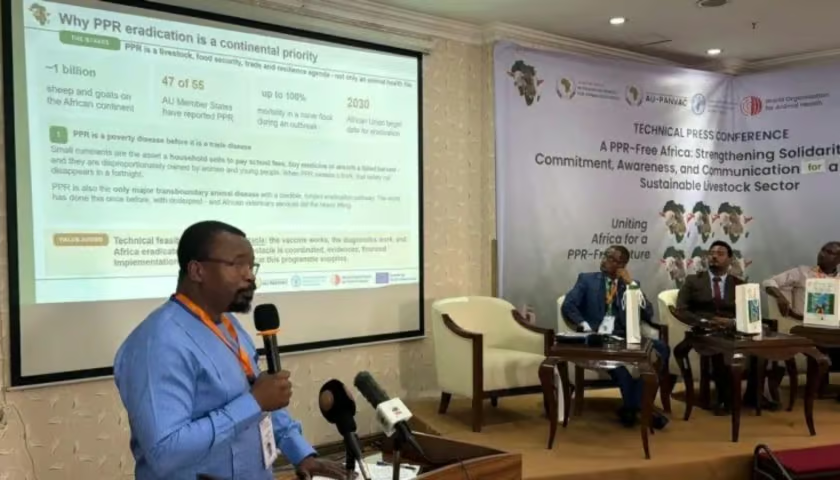
AFRICA – African countries are stepping up efforts to eradicate Peste des Petits Ruminants (PPR), but experts say stronger political commitment and increased domestic funding will be essential to eliminate the disease across the continent.
The call came during a mid-term review of the Pan-African Programme for the Eradication of PPR, 18 months after its launch.
The programme, hosted by the African Union Interafrican Bureau for Animal Resources (AU-IBAR), is funded by the European Union with €8 million (US$9.2 million) and implemented alongside FAO, WOAH, AU-PANVAC, Regional Economic Communities and African Union member states.
PPR, commonly known as goat plague, is one of Africa’s most damaging livestock diseases, affecting sheep and goats while threatening food security, rural incomes and regional livestock trade.

Programme partners reported progress in strengthening veterinary services, expanding disease surveillance, improving laboratory capacity and updating national eradication strategies.
However, they warned that financing remains a major obstacle to achieving the global target of eradicating PPR by 2030.
“One of the major challenges we face today is advocacy. We need to strengthen advocacy at all levels to secure increased funding and mobilise additional resources,” an FAO representative said.
The European Union also stressed that lasting success will depend on greater domestic investment.

“Lasting success cannot depend on external support alone. It requires sustained domestic commitment, national ownership and continued investment by African countries,” an EU representative said.
Countries strengthen vaccine production and surveillance
The continental programme is being reinforced by national investments in vaccine production, surveillance and livestock health systems across Africa.
Nigeria recently announced plans to establish a US$100 million veterinary vaccine manufacturing facility through a technology transfer partnership with a Chinese consortium.
The plant is expected to produce up to 1.2 billion veterinary vaccine doses annually, strengthening local vaccine supply for priority livestock diseases, including PPR, while reducing dependence on imports.
Sierra Leone has also intensified vaccination campaigns targeting sheep and goats while expanding disease surveillance with support from international partners.
The country considers PPR a priority livestock disease because small ruminants remain a key source of income and food security for rural households.
Uganda is pursuing a similar strategy through plans to establish a veterinary vaccine manufacturing facility with Egyptian support.
Although initially focused on foot-and-mouth disease vaccines, the project forms part of broader efforts to strengthen local vaccine production capacity and improve preparedness against transboundary animal diseases.
These national initiatives complement the Pan-African PPR programme by expanding veterinary infrastructure, improving vaccine availability and strengthening surveillance systems.
Together, they demonstrate Africa’s growing commitment to protecting livestock, improving rural livelihoods and moving closer to the continent-wide goal of eradicating PPR by 2030.
Sign up HERE to receive our email newsletters with the latest news updates and insights from Africa and the World, and follow us on our WhatsApp channel for updates.
Be the first to leave a comment