
SUSTAINABILITY & ESG
-
Brazilian soy traders move to exit Amazon soy moratorium, raising deforestation concerns
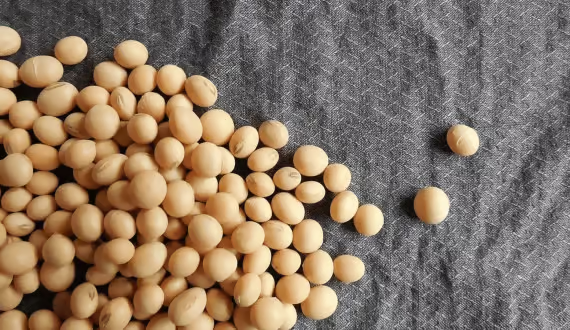
The soy moratorium bars signatory companies from purchasing soybeans grown on farms in the Amazon biome that were deforested after July 2008.
-

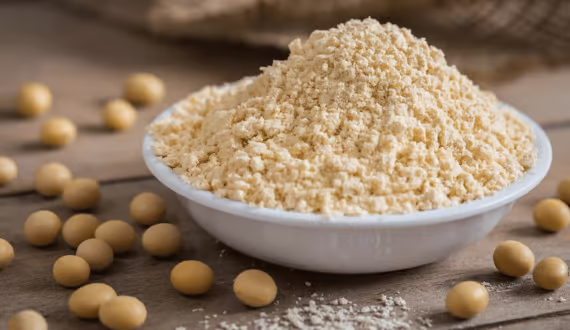
Bunge, Mantiqueira Brasil seal deal for traceable, low-carbon soybean meal
The soybean meal supplied under the agreement has an estimated carbon footprint between 40% and 70% lower than the Brazilian average.
-
Bunge Brazil certifies sustainable soybeans for SAF
The certification verifies that soybeans processed at the facility carry a low risk of indirect land use change (LUC).
-
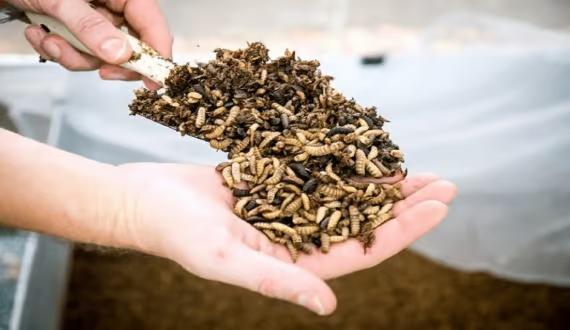
Innovafeed renews B Corp certification as it recalibrates North American expansion
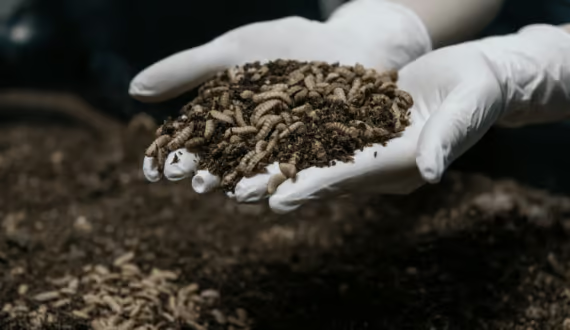
The renewed certification validates its fully circular model, which relies on repurposing agricultural by-products to produce insect-based protein.
-
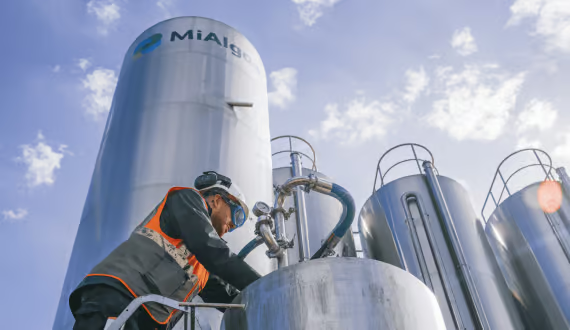
MiAlgae breaks ground on Grangemouth scale-up to meet surging demand for fish-free omega-3s
The project forms part of Project Willow, the Scottish government’s initiative to transform Grangemouth into a hub for green technologies.
-
Rumin8 acquires Roam to accelerate global cattle methane-cutting technologies
Neither of the parties has revealed the financial terms of the transaction yet.
-
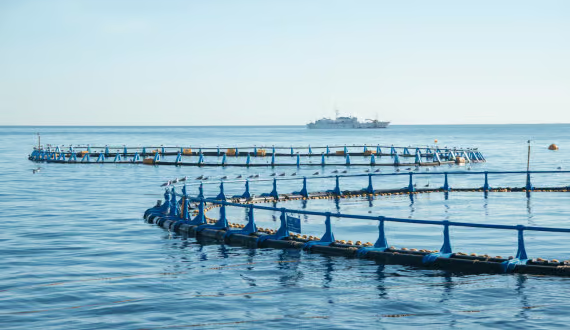
Africa advances aquatic biodiversity protection at high-level Mombasa meetings
The continent’s full blue economy is estimated to be worth US$300 billion per year, with potential to grow to US$405 billion by 2030 and up to US$576 billion by 2063.
-
Drones prove most effective for livestock methane measurement across Africa
The study shows how simple tools, when used with care, can help Africa track methane with accuracy and support a cleaner livestock sector.
-
Skretting Vietnam partners with Entobel to launch first commercial shrimp feed with insect meal
Insects are very efficient at converting feed into protein, making them in attractive option to supplement other protein sources in animal feed production.
-
Insect protein pioneer NextProtein secures US$19M to scale industrial production
FRANCE – NextProtein recently secured €18 million (about US$19.6 million) in Series B financing to accelerate industrial-scale production of insect-based ingredients, marking one of the…