Aquaculture & Fisheries
-

Indonesia’s mini-RAS expansion to drive aquaculture feed demand
The planned rollout follows Indonesia’s broader expansion of its thematic inland aquaculture programme.
-

Maine salmon farms face scrutiny over fish health and environmental risks
Critics warn that open-net farms could threaten wild salmon through escapes, disease and pollution.
-
Ghana explores palm oil waste as local fish-feed ingredient
The approach could add value to palm oil processing, reduce fish oil imports and create new income for small-scale processors and millers.
-
Nigeria targets 2.2M-tonne fish deficit with new production plan
High feed costs, limited access to quality fish seed and weak fish health systems are among the key barriers to aquaculture growth.
-
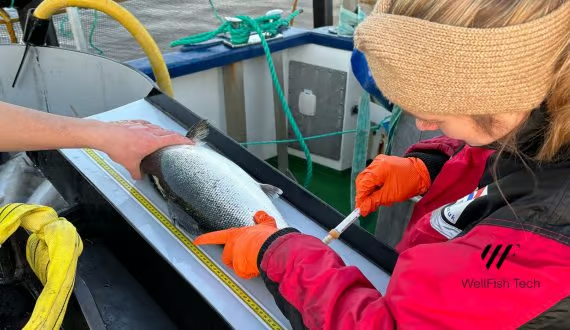
WellFish Tech secures oversubscribed funding to advance fish health monitoring
The interim financing was oversubscribed with participation from private investors, family offices, and venture capital across the UK, Norway, and the European Union.
-
dsm-firmenich scales single-cell protein for aquaculture and pet nutrition
The aim is to produce around 400-500 tons from mid-next year onward to seed the market and support customer trials.
-
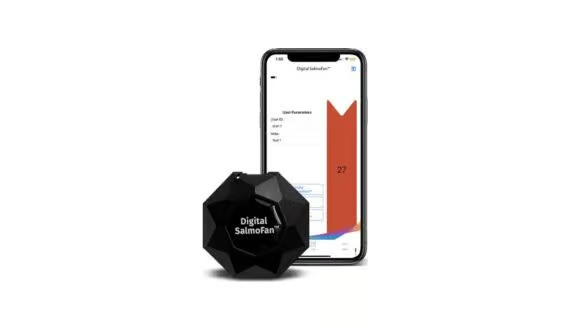
dsm-firmenich updates Digital SalmoFan™ for trout colour measurement
The updated software lets users select between salmon and trout species, ensuring consistent colour measurements anywhere, without light interference.
-
Seychelles, India advance fisheries and aquaculture cooperation
The discussion focused on aquaculture, hatcheries, tuna fisheries, stock assessment and post-harvest technology.
-
Redstone raises US$29M to back next-generation blue economy technologies
The Nordic-focused fund will finance pre-seed to Series A companies developing maritime and ocean technologies.
-
Burkina Faso expands cage farming as fish feed costs challenge aquaculture growth
The Yacouta project was stocked about six months before the first harvest and is part of a broader government strategy to increase domestic fish production.