

WOAH donates 100,000 rabies vaccine doses to Zimbabwe
Rabies continues to claim thousands of lives each year across Africa and Asia.
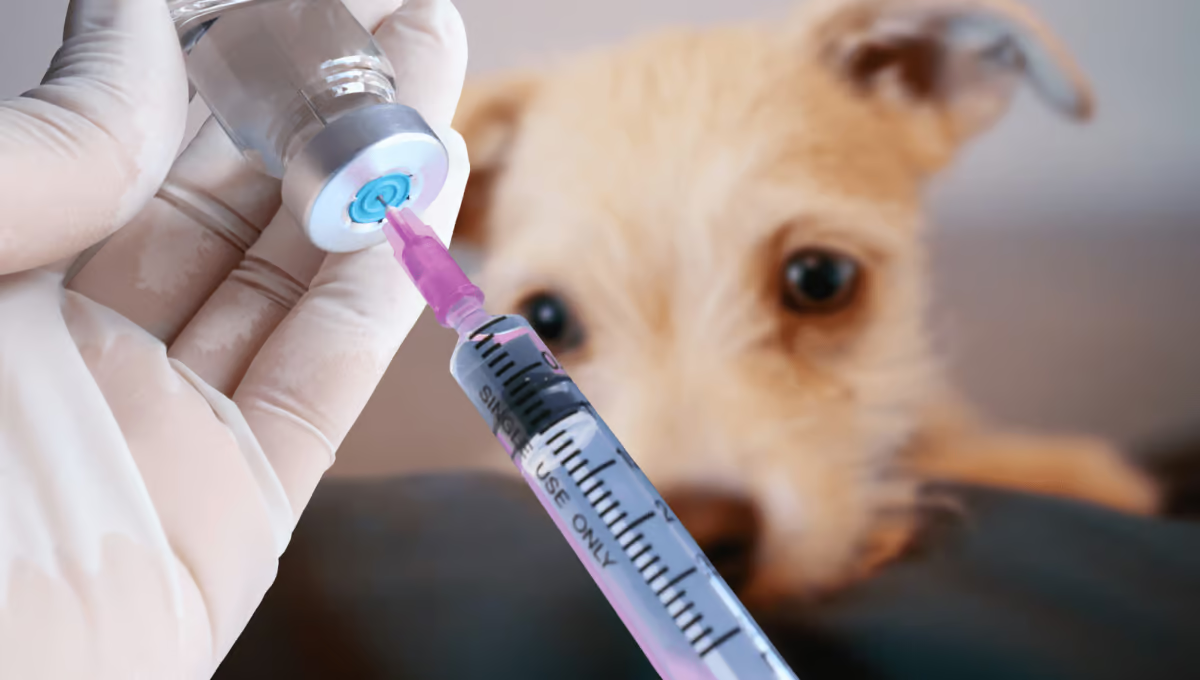
ZIMBABWE – The World Organisation for Animal Health (WOAH) recently donated 100,000 doses of high-quality rabies vaccine to Zimbabwe, marking a major boost to the country’s ongoing efforts to eliminate the deadly disease.
The handover took place on 13 August 2025 in Harare, where the vaccines were formally presented to the Ministry of Lands, Agriculture, Fisheries, and Rural Development.
The vaccine shipment, drawn from the WOAH Rabies Vaccine Bank, is part of the One Health for Rabies and Transboundary Animal Diseases (OHRT) Project, supported by the Federal Republic of Germany.
It comes at a critical time as Zimbabwe scales up mass dog vaccination campaigns to break the transmission cycle of rabies, which continues to claim thousands of lives each year across Africa and Asia.
“Rabies remains one of the deadliest yet most preventable zoonotic illnesses,” said Dr. Moetapele Letshwenyo, WOAH’s Sub-Regional Representative for Southern Africa. “These vaccines are shields of protection for both people and animals; they are not just doses in vials.”
Scaling up vaccination campaigns
Zimbabwe has previously benefited from WOAH’s support, receiving 110,000 vaccine doses in 2019. Authorities say the new consignment will allow them to intensify vaccination drives across both urban and rural areas, focusing on owned and stray dogs.
Deputy Minister of Lands, Agriculture, Fisheries, and Rural Development, Hon. Davis Marapira, who received the donation, assured that the vaccines would be deployed immediately.
“This generous donation from WOAH comes at a critical moment for Zimbabwe’s public and animal health sectors. These doses will support both mass dog vaccination drives and immunisation programmes targeting stray dogs, and we will be able to ramp up our vaccination campaigns, protecting communities and livestock across the country,” he said.
To safeguard vaccine efficacy, authorities have put in place a strong cold-chain system to ensure the doses remain effective from storage to field deployment.
A coordinated One Health approach
The vaccine handover builds on Zimbabwe’s recent progress in developing a comprehensive National Strategic Plan (NSP) for dog-mediated rabies control.
In June 2025, a three-day national consultative workshop in Harare brought together 20 technical officials from the veterinary, human health, wildlife, and environment sectors, alongside representatives from FAO and WHO.
The NSP provides a roadmap for rabies elimination, detailing strategies such as mass dog vaccination, improved surveillance, public awareness campaigns, and expanded access to human post-exposure prophylaxis.
Zimbabwe also plans to submit the NSP for WOAH endorsement, which would strengthen international recognition and technical support for its rabies control programme.

During the workshop, experts stressed that rabies is not only a health crisis but also an equity issue disproportionately affecting rural communities and children. Dr. Machakwa, Director of Veterinary Field Services, highlighted the urgency of action, noting that rabies deaths are entirely preventable with coordinated measures.
Aligning with the “Zero by 30” target
Zimbabwe’s elimination strategy aligns with the global “Zero by 30” goal, which aims to end dog-mediated human rabies deaths worldwide by 2030.
Working closely with partners such as FAO and WHO, WOAH continues to provide technical and financial support, including access to its international rabies vaccine bank and guidance on surveillance and reporting systems.
“As a fully subscribed member of WOAH, Zimbabwe demonstrates the benefits of strong veterinary governance and adherence to international standards,” said Dr. Letshwenyo. “We look forward to continued engagement, strengthening our partnership to safeguard both animal and human health across the region.”
For communities, the impact of the donation goes beyond numbers. Fewer families will lose loved ones to an avoidable disease, fewer children will suffer the trauma of rabies exposure, and both people and animals will be better protected through a coordinated One Health response.
Sign up HERE to receive our email newsletters with the latest news updates and insights from Africa and the World, and follow us on our WhatsApp channel for updates.


Be the first to leave a comment