

Zimbabwe’s fishing industry struggles amid lack of legal framework
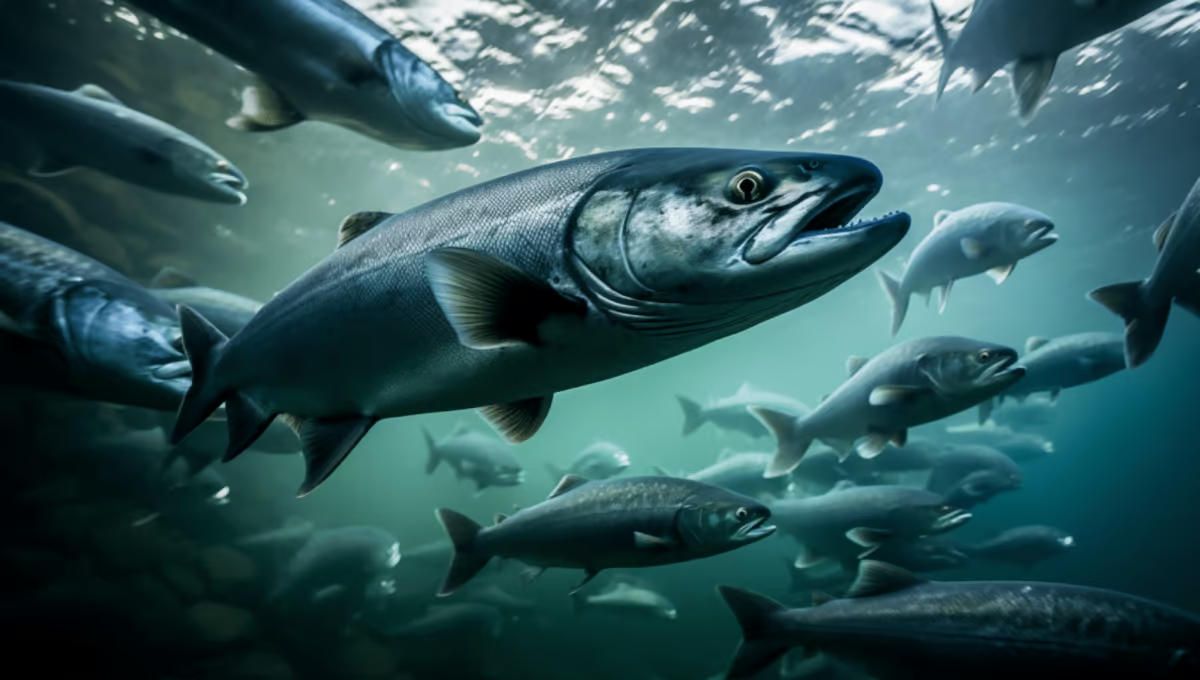
ZIMBABWE – Zimbabwe’s once-thriving fishing industry is grappling with severe challenges, resulting in an underproduction rate of over 75%.
Once ranked among Africa’s top three fish producers, the country now produces only about 15,000 metric tonnes of fish annually, far short of the 60,000 tonnes required to meet local demand.
Obert Jiri, Secretary for the Ministry of Lands, Agriculture, Fisheries, Water, and Rural Development, highlighted the sector’s struggle at Harare’s Fisheries and Aquaculture Value Chain Indaba.
He pointed out that Zimbabwe faces a significant deficit of 45,000 metric tonnes of fish and urgently needs robust strategies to revitalize production.
The government, in response, has launched the Presidential Fisheries Programme to encourage fish farming across the country.
Jiri noted that while the program aims to establish fish farming as a business in every village, numerous obstacles exist, including a shortage of fingerlings and a lack of support for farmers to sustain the industry.

The absence of a legal framework regulating the fishing industry has exacerbated these challenges. Milton Makumbe, Director of Fisheries and Aquaculture Resources Production, stressed the importance of establishing clear regulations.
Without these, the sector suffers from inefficiencies, illegal imports, and unregulated, poor-quality fish products that are potentially harmful to consumers.
Compounding the situation, climate change has drastically reduced water resources, decreasing fish stocks.
The industry, which focuses on species like Nile tilapia, rainbow trout, and bream, has also been hampered by a lack of expertise in fish farming and difficulties in accessing credit from financial institutions.
Despite the industry’s challenges, its financial potential remains substantial. In 2024, Zimbabwe’s fish and seafood market is expected to generate approximately US$667.40 million, with projections indicating an 11.34% annual growth rate until 2029.
Production is expected to reach 30.45 million kilograms of fish by 2029. However, the country’s current fish supply deficit forces it to rely heavily on imports, with an average of 9,482 metric tonnes of fish imported annually between 2017 and 2020.
To address the pressing shortfall and restore Zimbabwe’s position as a leading fish producer, stakeholders in the industry are calling for government action to establish a legal framework that will ensure sustainable growth, support fish farmers, and encourage local production.
Buy Zimbabwe chairperson Munyaradzi Hwengwere called on Zimbabweans to be competitive and support local products.
“So we need, as Zimbabwe, to be competitive with respect to our fish products because right now, we are not as competitive as our neighbors, and because of that, consumers are running away from our fish in preference to imported fish,” he said.

Without this, the country will not be able to meet its domestic fish demands, weakening an already struggling sector.
Sign up to receive our email newsletters with the latest news updates and insights from Africa and the World HERE.

Be the first to leave a comment