

Aquaculture’s reliance on wild fish far greater than expected, study finds
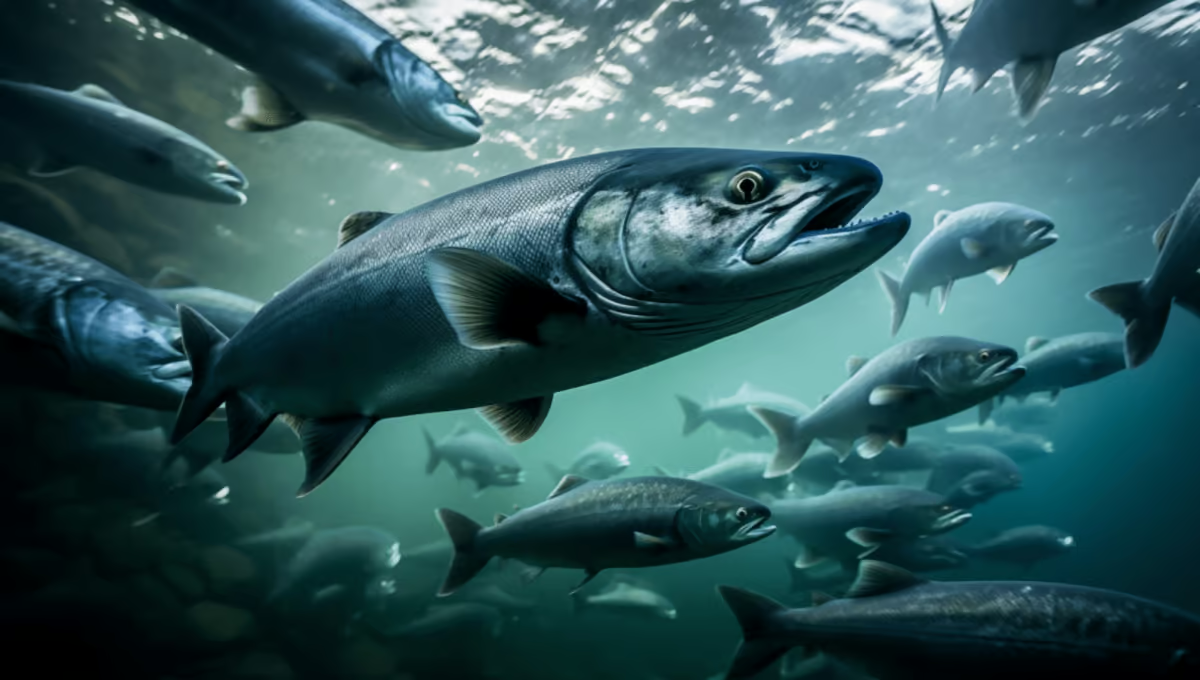
GLOBAL – A new study reveals that global aquaculture may rely on significantly more wild-caught fish than previously estimated, raising concerns about the industry’s impact on marine ecosystems.
The research by scientists from the University of Miami Rosenstiel School, Oceana, and New York University suggests that long-held assumptions about the sustainability of fish farming could be flawed.
The study reassesses the “fish-in:fish-out” (FI:FO) ratio, a key measure of the wild fish required to produce farmed fish. According to the findings, the ratio of wild fish inputs to farmed fish outputs is 27% to 307% higher than earlier estimates.
Previous figures placed the ratio at 0.28, but the new study estimates a range of 0.36 to 1.15, and when accounting for collateral damage during fishing and excluding unfed aquaculture systems, the ratio climbs further to between 0.57 and 1.78.
The study highlights the exceptionally high wild fish dependency for carnivorous farmed species such as salmon, trout, and eel, where wild fish inputs often exceed twice the farmed fish biomass produced. This revelation is especially concerning for sustainability advocates.
Spencer Roberts, the study’s lead author and a doctoral student at the Rosenstiel School, commented on the findings: “Our study reveals that the aquaculture industry relies more heavily on wild fish extraction than previous research has suggested. This demonstrates the scale at which aquaculture could be impacting marine ecosystems.”

The research takes a more comprehensive approach by including previously overlooked sources of wild fish in aquaculture feed, such as trimmings and byproducts from wild-caught fish, and collateral fishing mortality, like the practice of “slipping,” where unwanted catch is released but many of the animals do not survive.
By analysing multiple datasets, the team uncovered the wide range of uncertainty in current reporting on aquaculture feed inputs.
Jennifer Jacquet, a professor in the Department of Environmental Science and Policy at the Rosenstiel School and a study co-author, noted that the assumptions about carnivorous aquaculture have been overly optimistic.
She emphasised the need for strategic thinking about which species are most suitable for mass production in aquaculture.
The study also delves into the environmental trade-offs in reducing wild fish use in aquaculture feed.
While some reports suggest a decline in wild fish use in aquaculture from 1997 to 2017, the researchers found that this would necessitate a five-fold increase in terrestrial crop use over the same period.
Patricia Majluf, a senior scientist at Oceana in Peru, home to the world’s largest fishmeal fishery, warned that the growing use of trimmings and byproducts in aquaculture feed has not eliminated the use of whole wild fish.
“The offshore aquaculture industry is growing so rapidly that the wild-caught fish are not being replaced in their feed. Instead, other feed sources are just supplementing wild fish use,” Majluf stated.
The study calls for greater transparency in the aquaculture industry, particularly in the reporting of feed ingredients, and suggests that policies promoting aquaculture expansion on the grounds of sustainability may need reconsideration.

Matthew Hayek, an assistant professor at New York University and the study’s corresponding author, stressed the importance of understanding aquaculture’s environmental impact on marine and terrestrial ecosystems.
“Even with the wide uncertainty ranges reported, the impacts are still larger than previously thought,” Hayek said. “Most offshore finfish aquaculture facilities produce carnivorous fish, and therefore are responsible for depleting far more fish from the ocean than they produce.”
The researchers concluded that while their study offers a more comprehensive view of aquaculture’s environmental footprint, further research is necessary to fully understand its effects on issues like nutrient pollution, habitat destruction, and disease transmission to wild fish populations.
Sign up to receive our email newsletters with the latest news updates and insights from Africa and the World HERE.

Be the first to leave a comment